
![]()
We’re pleased to announce that the next edition of the geoblogging carnival, The Accretionary Wedge, will be held here (for the first time ever!) at Highly Allochthonous at the end of the month. The theme that we’ve chosen is simple: we want to amass a gallery of all of your favorite geologically themed pictures.
It could be a photograph you’ve taken of an outcrop or process in action; a diagram from a classic geologic paper or text book; a satellite image of an incredible landscape; an optical microscope picture of your favorite mineral; something topical, or an old and inspirational favorite. Whatever strikes your fancy. You might consider writing a little about what your chosen images shows or why you chose it, but wordless entries are OK too. We’re also OK with recycled submissions if you’ve got a post in your archives that fits the carnival theme.
The deadline for submission of posts will be Friday, May 28. To submit your entry, leave a link to in the comments section here or at the Accretionary Wedge blog. We encourage our non-blogging readers to contribute their favorite images as well: we’ll be happy to publish your image here.
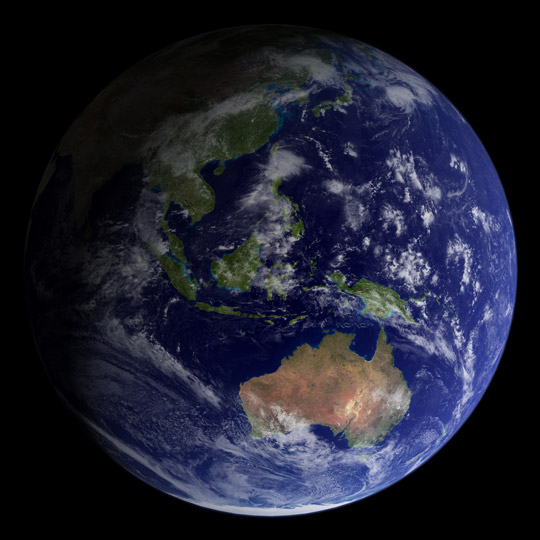
If a picture is worth a thousand words, we should be able to amass an entire visual novel by the month’s end. We look forward to seeing what you all choose!

The Authors
Search this blog
Categories
Archives
-
Recent Posts
- In large earthquakes, the Earth moves for almost everyone
- And the ScienceSeeker Award for best physics, astronomy, or earth science post goes to…
- Weekend procrastination for geonerds
- The dimensions of natural disasters
- After the dam came out: The Cuyahoga River in Kent
- My class visits the Geology Department – by Geokid
- The intrusion of nature
- Echoes of Wenchuan: magnitude 6.6 earthquake shakes Sichuan province in west China.
Latest Comments
- On And the ScienceSeeker Award for best physics, astronomy, or earth science post goes to…:
- Silver Fox: Very nice! Read
- Carol Jefferson: Most excellent, Chris. Read
- Chenjian: Cool! Congratulations! Read
- Eric Bilderback: As noted in other comments, the three axis plot is a graphical representation of some of the... Read
- Damian Grant: This is exactly the representation of risk used in the risk literature, where Vulnerability is... Read
- Gaythia Weis: I agree that vulnerability is key. This could be quite useful in such things as future development... Read
- Anne Jefferson: The Pennsylvania and Ohio canal was constructed around 1840 and went out of use in ~1857. A... Read
- Lab Lemming: How long since the locks were navigated? They look early 1800′s from the channel size. Read
Geotweetage


Nice one!
Ok, here’s mine:
http://shortgeologist.blogspot.com/2010/05/accretionary-wedge.html
Suggested contribution at http://my.opera.com/nielsol/blog/accretionary-wedge-geo-image
Ikenna at Failed Rift has left a link at the AW announcement.
It seems my entry has already been announced (I wasn’t expecting that)
There were some problems embedding Google map imagery but it has been solved.
Ikenna
Nsukka, Nigeria
Here is mine
http://geologyblues.blogspot.com/2010/05/accretionary-wedge.html
I posted this on my blog a bit ago but it is one of my favorites. The lens got stuck and I didn’t realize it until I got home.
http://jazinator.blogspot.com/2010/03/pretty-cool-picture-of-monument-valley.html
My entry is here: http://geotripper.blogspot.com/2010/05/my-favorite-geology-foto-mays.html
Here’s one of my favorite photos from Hawaii: http://magmacumlaude.blogspot.com/2010/05/geo-image-accretionary-wedge.html
Here’s my favorite geo-photograph:
http://www.geoberg.de/blog/geoblogosphaere-web-2-0/mein-beitrag-zum-aktuellen-accretionary-wedge-geo-image-bonanza
Hope you’ll like it.
Lutz, Germany.
My favorite photo of the past six months is this lovely example of ptygmatic folding. It makes me happy every time I look at it.
And here’s some context for that ptygmatic fold photo.
Here is my contribution
http://suvratk.blogspot.com/2010/05/accretionary-wedge-geo-images-calcite.html
thanks
My contribution, a microphotograph of carbonate grainstones. http://lostgeologist.blogspot.com/2010/05/accretionary-wedge-geo-image-bonanza.html
Per Callan Bentley’s recommendation on Twitter, this image of the mantle “in overdrive” under Alaska has been nominated for the AW: http://news.discovery.com/earth/zooms/earth-mentle-crust-alaska.html
I hope, I didn’t spam your comment box but my comment doesn’t show up…
Here’s my aw#25
http://schmunda.blogspot.com/2010/05/accretionary-wedge-25-geo-image.html
A predictable contribution can be viewed at http://throughthesandglass.typepad.com/through_the_sandglass/2010/05/beach-patterns-accretionary-wedge-geoimage-bonanza.html
I’m really looking forward to seeing the diversity of images for this bonanza!
Here’s one:
http://stubotics.com/geoalbum/hematite-R.jpg
This shows some intersecting hematite sheets in the Pennsylvanian Corbin Sandstone in the Red River Gorge Geological Area of Daniel Boone National Forest, eastern Kentucky. This is near Gray’s Arch. I’m puzzled by how these sheets form, so if anyone can shed light on it post a comment.
Sorry guys, I just discovered that a lot of the entries were getting sent to our spam folder (and we don’t get alerts about spam comments). If anyone else tries to comment and it gets held up, please send Chris or I an email and we’ll liberate it ASAP.
This is the contribution of Geologia Marinha e Costeira
http://geologiamarinha.blogspot.com/2010/05/accretionary-wedge-geo-images.html
Thanks for hosting and this should be a fun turn out!
http://gmcgeology.blogspot.com/2010/05/geology-paintings-works-of-levi-wells.html
Here is mine
http://poolsandriffles.blogspot.com/2010/05/riviere-de-terre.html
Boy that was difficult finding just one image:http://geologyhappens.blogspot.com/2010/05/geo-image-bonanza-aw-24.html
What a turnout! This is going to be a great one. Here’s mine.
Another one:
http://zsylvester.blogspot.com/2010/05/deep-sea-landscapes-from-ice-age.html
here is an entry: visually spectacular conglomerate of the Ogallala/Arikaree formation near the Pawnee Buttes in north eastern Colorado. The buttes rise some 300-feet above the plains.
http://www.flickr.com/photos/flight0001/4283129331/in/set-72157617689162564/
and one more: Fountain Valley at Roxborough State Park near Denver, Colorado shows sandstone formations belonging to the Fountain Formation and Permian Lyons Formation as well as hogbacks of Cretaceous Dakota sandstone that were all tilted skyward during the rise of the Rocky Mountains.
http://www.flickr.com/photos/flight0001/3965140613/in/set-72157623946574927/
here’s mine: http://clasticdetritus.com/2010/05/28/geo-image-extravaganza-my-header-photograph/
Here’s mine: http://highway8a.blogspot.com/2010/05/accretionary-wedge-geo-images-gold-with.html
Almost forgot to add it here!
Here’s my addition:
http://pascals-puppy.blogspot.com/2010/05/longs-peak-album.html
My contribution to the Wedge, a little bit of geomorphology.
A shortened, properly-titled version of my original contribution. Hope it meets with approval.
A couple of photos from the Eagle Mts. of West Texas. http://geosciblog.blogspot.com/2010/05/favorite-geophotos-for-accretionary.html
With links to more…
Sorry I’m a day late, here is my contribution: http://jrepka.blogspot.com/2010/05/accretionary-wedge-geo-image-bonanza.html
The Highly Allochthonous bloggers are hard at work on the Accretionary Wedge. It is going to be awesome. Thanks for all the submissions!
http://img25.imageshack.us/img25/1356/dscn1940h.jpg
Overturned syncline at Dog Canyon, Big Bend National Park.
Late. Sorry. S670P.
http://hypocentral.com/blog/2010/06/01/accretionary-wedge-25-images/
I hope this entry isn’t too late – I was out looking at rocks! Here it is:
http://helenaheliotrope.blogspot.com/2010/06/kings-canyon-national-park.html



