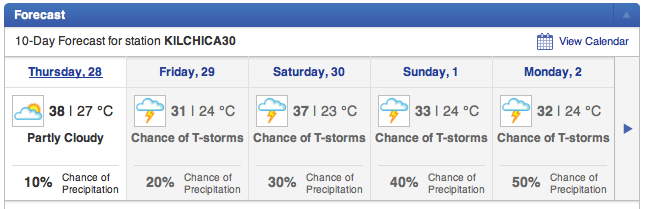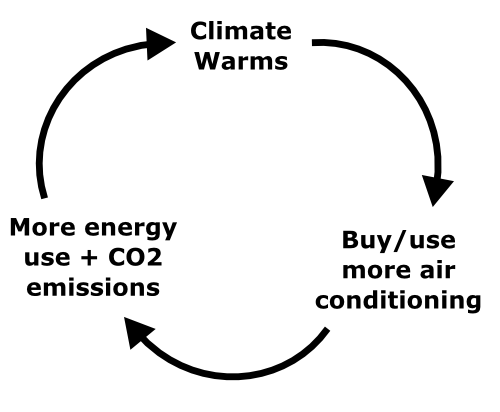

 A bit late with the link-fest this week: it turns out that when you spend the whole weekend under a sprinkler to avoid overheating in the midwest’s current heatwave, laptop and internet usage go down substantially…
Other posts on All-geo
- On Metageologist: great post on the evidence for orbitally controlled glacial-interglacial cycles in the Carboniferous.
http://all-geo.org/metageologist/2012/06/cycling-in-the-pennines-300-million-years-ago/ - On Volcan01010: On the geology of #Prometheus (Hint: it’s Iceland, but only just).
http://all-geo.org/volcan01010/2012/06/on-the-geology-of-prometheus/
Volcanoes
- Maybe the people planning to toss tsunami debris into a Pacific volcano should heed Erte Arle’s reaction to littering…
http://www.spiegel.de/wissenschaft/natur/video-vom-vulkan-erta-ale-muellbeutel-laesst-lavasee-brodeln-a-840978.html - New paper in Nature Geoscience linking hydrothermal activity above & seismicity/magma injection below on ocean ridge.
http://www.nature.com/ngeo/journal/v2/n7/abs/ngeo550.html
Earthquakes
- Another *very* cool-looking earthquake visualisation: global M4+ quakes since 1898 by
http://www.flickr.com/photos/idvsolutions/7439877658/sizes/h/in/photostream/
(via @JohnNelsonIDV) - New book identifies earthquake “time-bombs”: megacities with high population and hazard, low preparedness.
http://www.katu.com/news/local/Megacity–Megaquake–Time-Bomb-Many-thousands-of-people-will-die-160455915.html
(via @CPPGeophysics) - Very cool: two new papers on Tohoku tsunami identify possible geochemical markers for mapping extent of paleotsunami.
http://www.paleoseismicity.org/blog/2012/06/25/two-new-paper-on-the-tohoku-tsunami-japan-2011/ - Wow! 18 kyr earthquake record from turbidites off E Coast of NZ. Interesting long-term frequency variations…
http://www.nat-hazards-earth-syst-sci.net/12/2077/2012/nhess-12-2077-2012.html - Excellent write-up from Trembling Earth blog marking 20 years since M7.3 Landers earthquake
http://tremblingearth.wordpress.com/2012/06/28/landers-20/ - Quake safety still underplayed? : Scientists worry about Japan’s decision to restart nuclear reactors
http://www.scientificamerican.com/article.cfm?id=seismologists-warn-japan-against-nu
(via @EuroGeosciences)
Wildfires in the Western US
- Holy cow, those are big fires. Satellite aerosol measurements pick out the smoke-wreathed Rocky Mountains
http://earthobservatory.nasa.gov/IOTD/view.php?id=78389 - Colorado Wildfires Explained in One Chart – note how upper and lower snowpack outliers are 2011 and 2012.
http://www.climatecentral.org/blogs/colorado-wildfires-explained-in-one-chart/ - Pondering a Link Between Forest Fires and Climate Change.
http://green.blogs.nytimes.com/2012/06/28/pondering-a-link-between-forest-fires-and-climate-change/
(via @ClimateComms) - Long-term context of fires in W US: by warming climate & suppressing wildfires, humans have built up a “fire deficit”.
http://wwwp.dailyclimate.org/tdc-newsroom/2012/06/wildfire-deficit - Intersection of Wildfire and Natural Gas Drilling, happening now in Colorado.
http://www.businessinsider.com/colorado-wildfires-spread-to-natural-gas-site-2012-6
(via @MichaelEMann) - The journalist meets fire behind her house: “Then I grabbed my camera … and walked toward the fire.”
http://www.lastwordonnothing.com/2012/06/28/summer-of-smoke/
(via @jfleck, @cragcrest)
(Paleo)climate
- At least one branch of North Carolina’s government is redeemable: House shoots down ridiculous sea level rise bill: (by )
http://theseamonster.net/2012/06/nc-sea-level-rise-saga-update-2/
(via @SpinyDag, @JohnFBruno)
And of course, where else would some of the best evidence for accelerating sea level rise come from but peat bogs on the NC coast?
http://www.realclimate.org/index.php/archives/2012/06/far-out-in-north-carolina/ - Pollen from potshards: a neat collaboration where pollen in datable artefacts provides paleoclimate data.
http://sciencythoughts.blogspot.com/2012/06/pollen-from-potshards-and-what-it-can.html - Siberian lake core provides 2.8 my of climate data useful for understanding role of complex feedbacks in climate change
http://arstechnica.com/science/2012/06/2-8-million-years-of-climate-data-lurking-in-russian-lake/
(via @rapiduplift) - Proxies are tricky: Oxygen isotopes in Greenland ice cores prob exaggerate amount of Younger Dryas cooling
http://www.sciencedaily.com/releases/2012/06/120625162907.htm
(via @rivrchik) - Long-term: Arctic sea ice is declining. Short-term: a lot of variability in shrinkage/growth rates. Why claims of “record lows” need to be treated with care.
http://www.carbonbrief.org/blog/2012/06/arctic-sea-ice-june-low-claims-jump-the-gun
(via @chr1stianh)
Water
- Tropical Storm Debby may be gone, but Florida’s rivers will remain swollen for days, flooding homes nearby.
http://www.tampabay.com/news/weather/hurricanes/tampa-bay-rivers-reach-dangerously-high-levels-as-debby-moves-north/1237267
(via @craigtimes, @johnwoodrowcox) - Flooding and forecast uncertainty in Florida’s Tropical Storm Debby
http://tompagano.blogspot.com/2012/06/more-animals-in-streetsthe-cone-of.html - 1 million flee floods (27 dead) in India’s Assam state
http://www.bbc.co.uk/news/world-asia-india-18639529 - Dams will continue to be built for economic gain, but how can we limit their environmental damage? (nonUK)
http://www.bbc.com/future/story/20120627-dammed-if-you-do
(via @BBC_Future) - Interesting table of fecal coliform per gram & per day for diff species and the connection to water quality.
http://neorsd.blogspot.com/2012/06/pup-picking-up-waste-dropping-some.html
(via @neorsd) - Superb opinion piece on Cadiz water scheme for the Mojave by KCET journalist Chris Clarke http://www.kcet.org/updaily/socal_focus/commentary/opposition-mounts-to-cadiz-water-plan.html
(via @chanceofraincom, @kcet) - Alaska Glacier Studied For Clues On Water Supply (NPR) [Great project including undergrads]
http://www.npr.org/2012/06/25/155462729/alaska-glacier-studied-for-clues-on-water-supply
(via @rivrchik)
Environmental
- Good news: EPA greenhouse gas regulations survive court challenge.
http://www.nationaljournal.com/domesticpolicy/court-upholds-epa-climate-change-rules-20120626 - BBC News – Polluted legacy: Repairing Britain’s damaged landscapes
http://www.bbc.co.uk/news/uk-england-derbyshire-17315323 - Californian condor not extinct yet, but still regularly poisoned by lead.
http://blogs.discovermagazine.com/notrocketscience/2012/06/25/californian-condor-not-extinct-yet-but-still-regularly-poisoned-by-lead/
(via @jgold85, @edyong209) - Great stuff: blogging ecosystem recovery in wake of dam removal in Olympic National Park.
http://www.nps.gov/olym/naturescience/damremovalblog.htm
(via @kejames) - NREL Study Shows 80% Renewables Possible By 2050 – with commercially available technology.
http://thinkprogress.org/climate/2012/06/27/507241/thinking-big-nrel-study-shows-80-percent-renewables-possible-by-2050/
(via @climateprogress)
Fossils
- Dinosaur’s patterns of bone growth more similar to large mammals than thought, supporting theory they were warm-blooded. Or alternatively, large mammal bone growth pattern is more similar to dinosaurs’ than thought (thanks to Thomas Holtz for the inversion
http://www.nature.com/news/dinosaurs-warm-up-1.10897
Planets
- Changes in the shape of Titan as it orbits Saturn indicates it has a global subsurface ocean
http://www.nasa.gov/mission_pages/cassini/whycassini/cassini20120628.html - 100km wide, 3 billion year-old impact crater found on the west coast of Greenland.
http://linkinghub.elsevier.com/retrieve/pii/S0012821X12001938?via=sd&cc=y
General Geology
- Geology is (political) destiny! How voting in the southern US is controlled by the patterns of Cretaceous chalk deposition.
http://deepseanews.com/2012/06/how-presidential-elections-are-impacted-by-a-100-million-year-old-coastline/ - The Periodic Table, geochemistry edition: a clue why geochemistry makes most sane peoples’ heads hurt.
http://www.planetary.org/blogs/emily-lakdawalla/2012/06251711-geochemists-periodic-table.html
(via @elakdawalla) - Nice description of the karst landscape of southeastern Minnesota: close to home for Anne.
http://earthscienceguy.posterous.com/minnesota-geology-monday-karst
(via @earthscienceguy) - Galapaagos Monday by @virginiahughes. Apparently. the geology + climate isinhospitable for some colonists and tourists.
http://www.lastwordonnothing.com/2012/06/25/galapagos-monday-southern-inhospitality/ - Detailed magnetostratigraphy finds 13 short Late Cretaceous polarity subchrons not obvious in ocean floor ‘stripes’
http://www.sciencedirect.com/ - If Earth had a Facebook, would it ‘unfriend’ humans? Earth’s status updates over the millenia.
http://youtu.be/GBrLOlTbJQc
(via @EuroGeosciences, @sciencealert) - It’s complicated down there: structure of the European upper mantle revealed by adjoint tomography
http://www.nature.com/ngeo/journal/vaop/ncurrent/full/ngeo1501.html
(via @geocastaway) - I’m jealous, and you will be too: Seven Days of Geology and Hiking on the Colorado River in Grand Canyon
http://earthly-musings.blogspot.com/2012/06/seven-days-of-geology-and-hiking-on.html
Interesting Miscellaney
- RIP Lonesome George, Galapagos tortoise the last of his kind.
http://uk.reuters.com/article/2012/06/24/us-ecuador-tortoise-idUKBRE85N0PI20120624http://www.henrynicholls.com/lonesomegeorge.html
(via @alexwitze) - Placing wind turbines in the arches of a viaduct? Seems pretty genius to me…
http://www.newitalianblood.com/solarparksouth/projects/300-1.html - Cool and strangely hilarious: possible cause of mysterious AD 774 14C spike in Japanese trees found by Googling.
http://www.scientificamerican.com/article.cfm?id=supernova-red-crucifix-sky-774ad - xkcd on Moon Landing being a hoax: ‘if NASA were willing to fake great accomplishments, they’d have a 2nd one by now.’
http://xkcd.com/1074/ - Why is ‘having it all’ just a women’s issue? h/t Pat Campbell
http://www.cnn.com/2012/06/25/opinion/coontz-women-have-it-all/index.html?hpt=hp_t3 - This is a sweet story: Students volunteer and fundraise to fix vandalized Ohio museum.
http://t.co/TAcEd3pRu20
(via @AiGeology) - Interesting post on challenges of producing good scientific figures, especially need to tailor for talk/poster/paper.
http://oncirculation.com/2012/06/26/the-difficulty-with-diagrams/