Just like an iceberg, the parts of the Hawaiian Islands that you see above the ocean surface are dwarfed in volume by the stuff below the waves. For a start, any volcano that forms in the middle of the Pacific Ocean has to grow to about 5 kilometres high before it even gets close to peeking above the waves. But there’s also the fact that Hawaii is merely the young and emergent end of the Hawaii-Emperor seamount chain, a line of mostly submerged volcanic seamounts that stretches more than six thousand kilometres and eighty million years across the Pacific ocean.
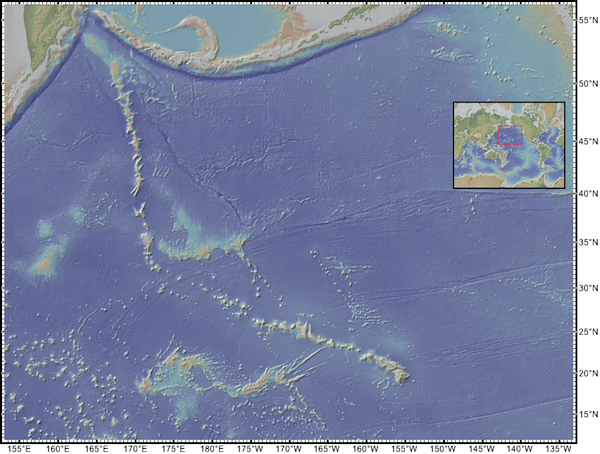
The Hawaiian-Emperor Seamount chain, with Hawaii and the Big Island to the bottom right. GMRT Global Bathymetry, created using GeoMapApp.
This giant chain of volcanoes is the result of the Pacific plate moving across a relatively fixed melt source in the mantle beneath, which is generally thought to be anomalously hot material in an upwelling mantle plume. Directly above this ‘hotspot’, you get an active volcanic island that gradually grows up from the ocean floor until it rises above the surface of the ocean, eventually forming a large shield volcano. But this is a temporary state of affairs: motion of the Pacific plate will eventually move the newest volcano and it’s magmatic plumbing system too far from the hotspot. The old volcano will give way to a new one, formed anew directly above the melt source. Subsidence due to cooling and erosion then work in concert on the older volcano: the shield is heavily eroded, and then slips below the waves again.
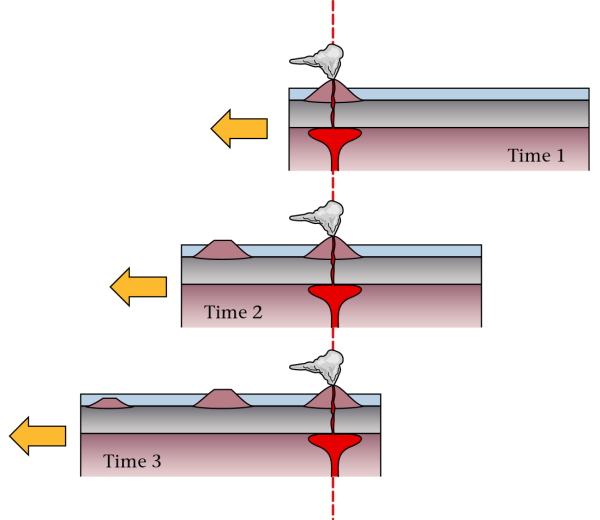
Formation of an ocean island chain by motion of a tectonic plate over a fixed mantle plume..
The schematic textbook image above makes this process look pretty linear and straightforward. Only one volcano in the chain is active at any one time, and each volcano forms its own little island. It should come as no surprise that in reality, things are a little more complicated; but when I visited Big Island earlier this year, I found myself fascinated by just how much more complicated the reality of hotspot volcanism actually was.
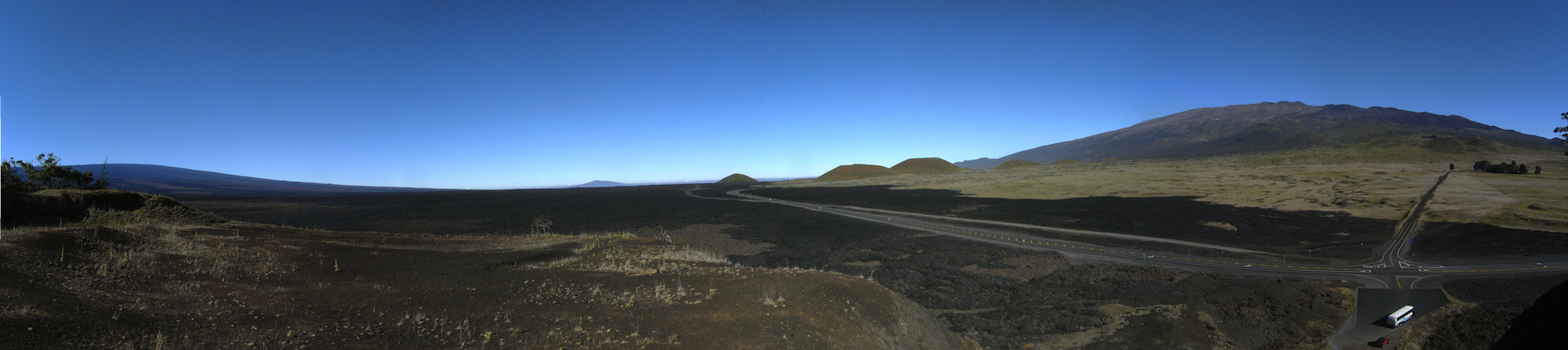
On our tour of the Big Island, our first major stop was the saddle between Mauna Loa and Mauna Kea (click on this, or any of the other photos in this post to a larger version):
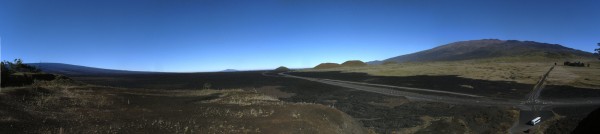
A panoramic view of Mauna Loa (left) and Mauna Kea (right) from the crest of the Saddle Road, Big Island, Hawaii. Click for a larger version. Photo: Chris Rowan, 2012.
The first deviation from the textbook is so obvious that you almost find yourself ignoring it, but it is clear enough in the panorama above: there is more than one volcano on the Big Island. Mauna Loa and Mauna Kea are both huge volcanic shields, right next door to each other on the same island, and within 50 metres or so of being the same height (Mauna Kea is the higher of the two). But whilst they are twins in size, there are a number of clear differences. It is easy to spot that even without the historical record that proves it, Mauna Loa has been more recently active: in the image above, a lava flow originating from the peak of Mauna Loa on the left, from an eruption in 1984, is clearly lapping up onto the slopes of Mauna Kea, which has not not erupted for almost 5000 years.
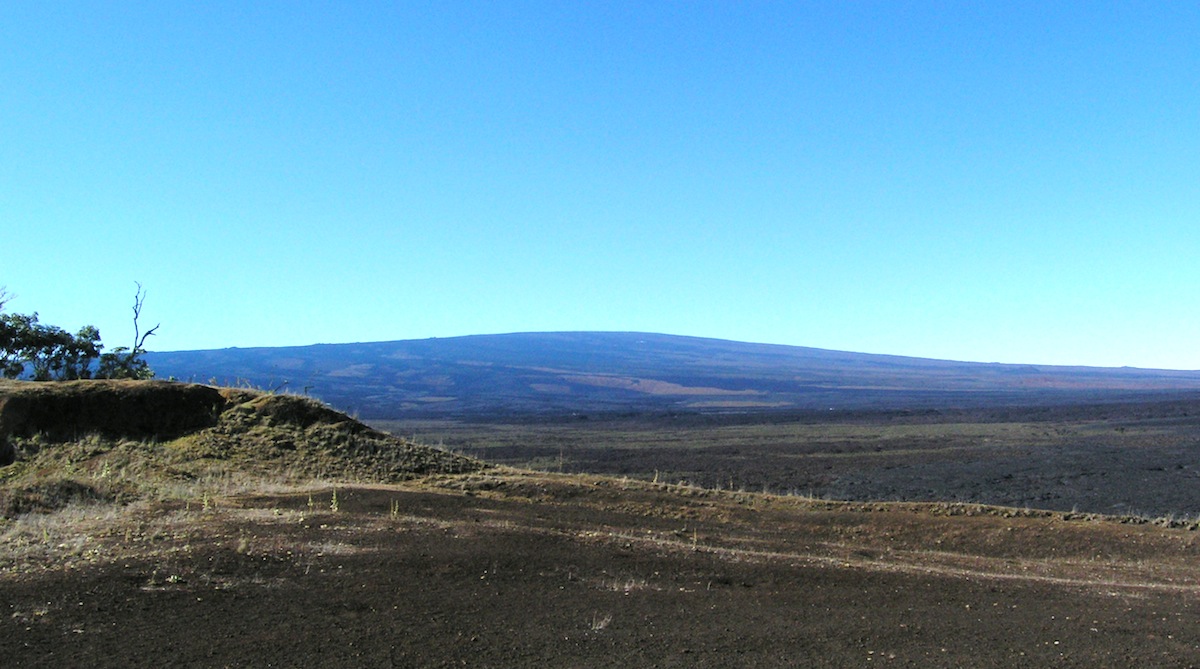
The two volcanoes are also different in shape. Mauna Loa is a classic shield volcano, sprawling and shallow-sloped.
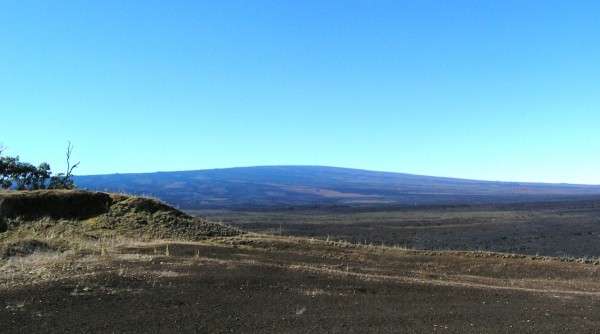
Mauna Loa: a classic shield volcano. Photo: Chris Rowan, 2012.
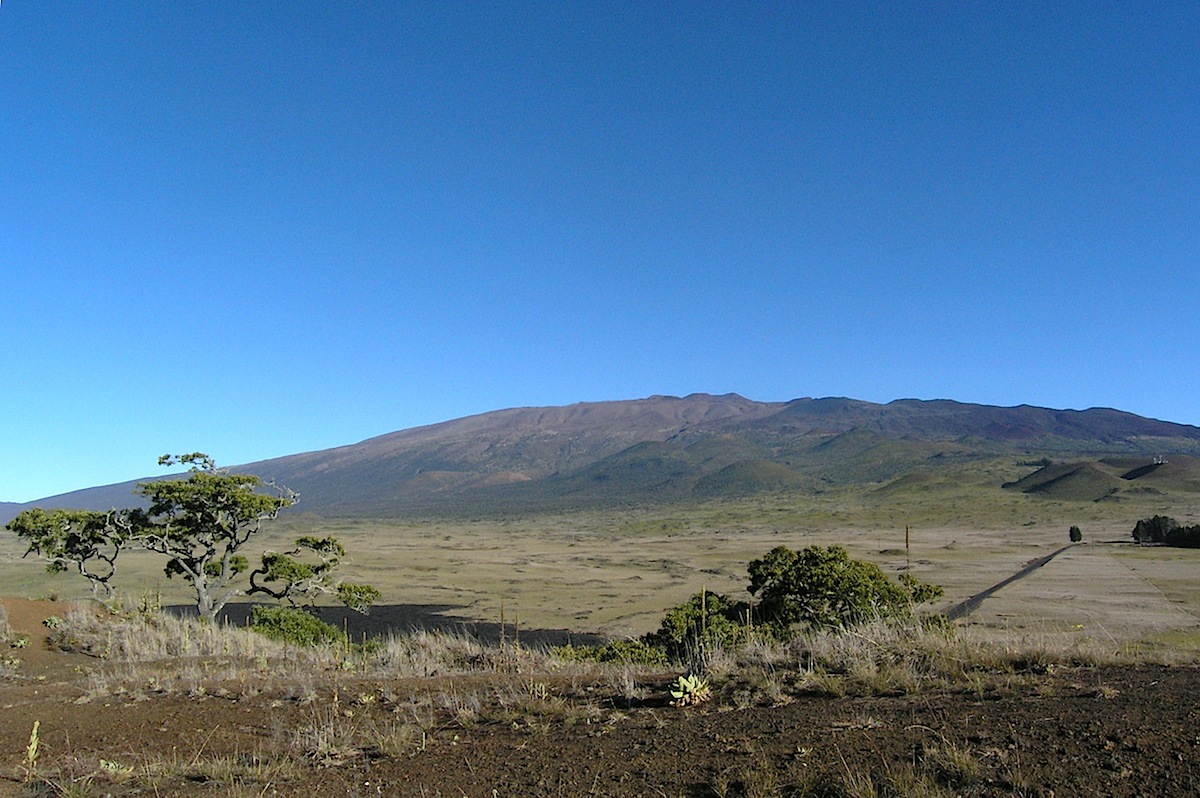
In contrast, Mauna Kea has a much less smooth profile; its more rugged, steeper slopes are also infested with numerous cinder cones (all of the photos so far are from the summit of one of them).
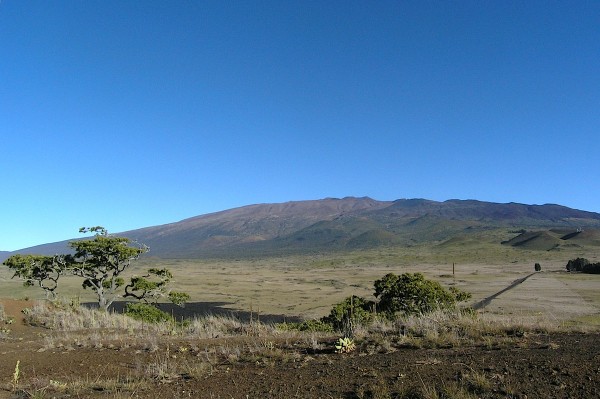
Mauna Kea; not such a classic shield profile. Photo: Chris Rowan, 2012.
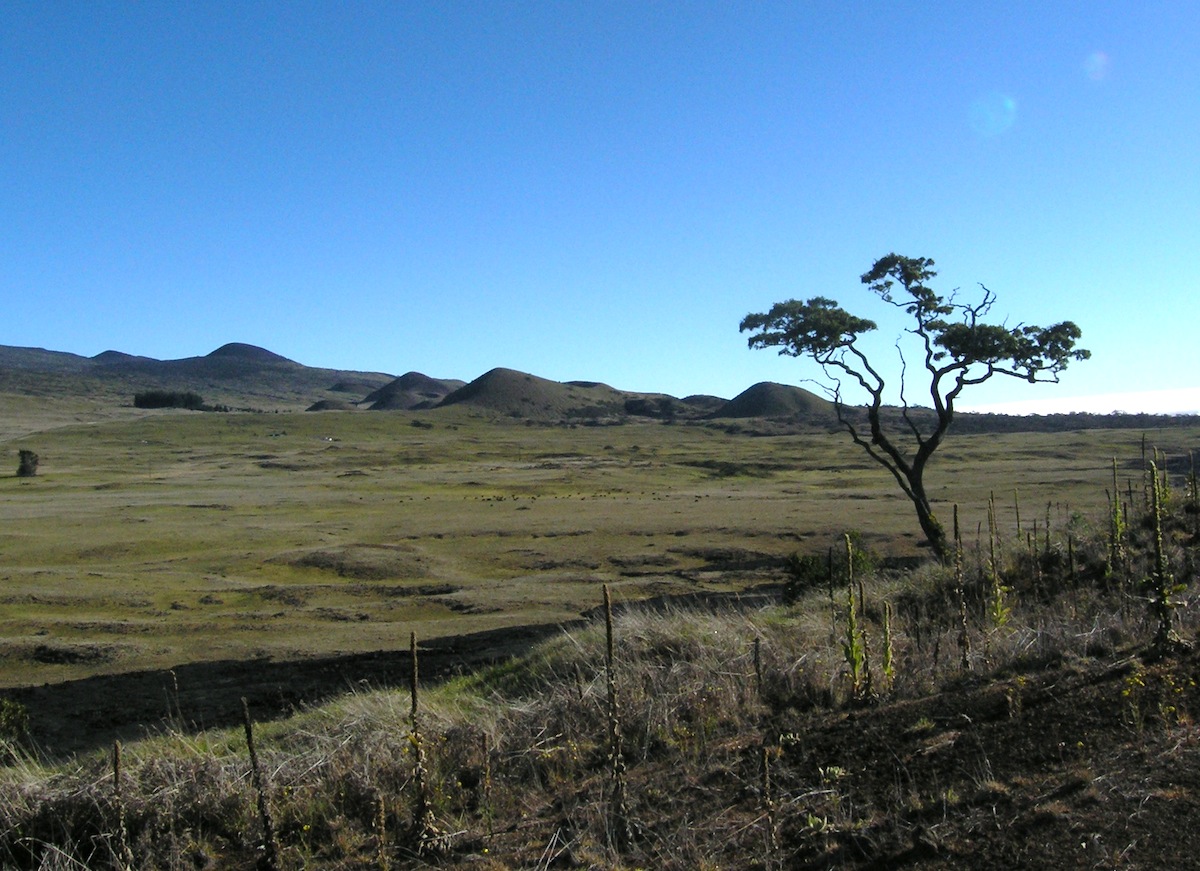
A typical shield volcano erupts thin, runny basalts that can flow for miles and miles away from the summit: the 1984 lava erupted by Mauna Loa is a good example. In contrast, the last lavas to erupt from Mauna Kea were much more viscous; this led to thicker, less smooth lava flows that piled up around the summit, and also increased the chance of the eruptions turning explosive (gases are trapped more easily in stronger, viscous melt) and producing cinder cones.
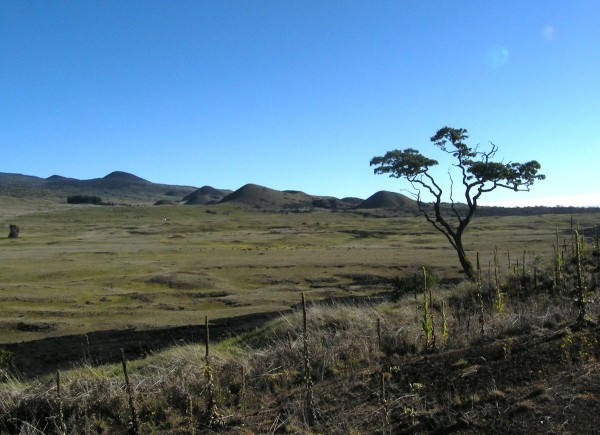
Late stage cinder cones on the slopes of Mauna Kea. Photo: Chris Rowan, 2012.
The change in lava composition and the style of volcanism that has produced Mauna Kea’s more rugged profile is a sign that its magmatic plumbing system is less connected to the hotspot than it once was – the pipes have literally been stretched by the northwest motion of the Pacific plate away from the source region, meaning less magma with a different composition. This ‘post-shield’ stage is the volcanic equivalent of old age: thus Mauna Loa and Mauna Kea present a contrast between a mature shield volcano in its prime, and one that has succumbed to old age, with viscous, less dynamic magmas marring its perfect shield form.
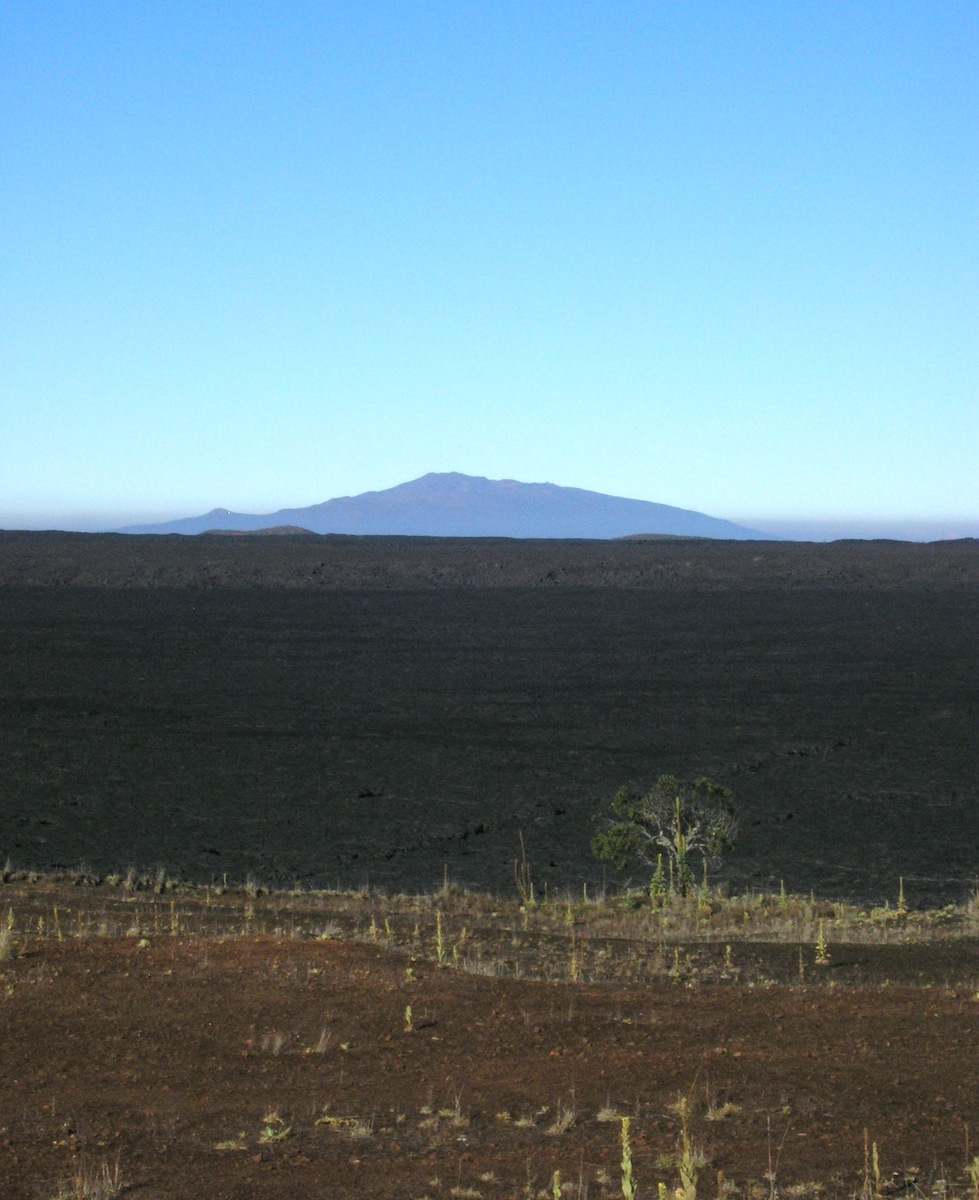
But that’s not all. The sharp-eyed amongst you might have noticed another peak in the centre of my opening panorama: this is Hualalai, the third member of the Big Island volcano family. A closer look shows a rugged profile due to post-shield cinder cones, but it turns out that Hualalai is a rather spry elder relative, still capable of erupting big sheet lava flows. The last one was in 1801, and it flowed all the way to the sea – Kona airport is built on top of it.
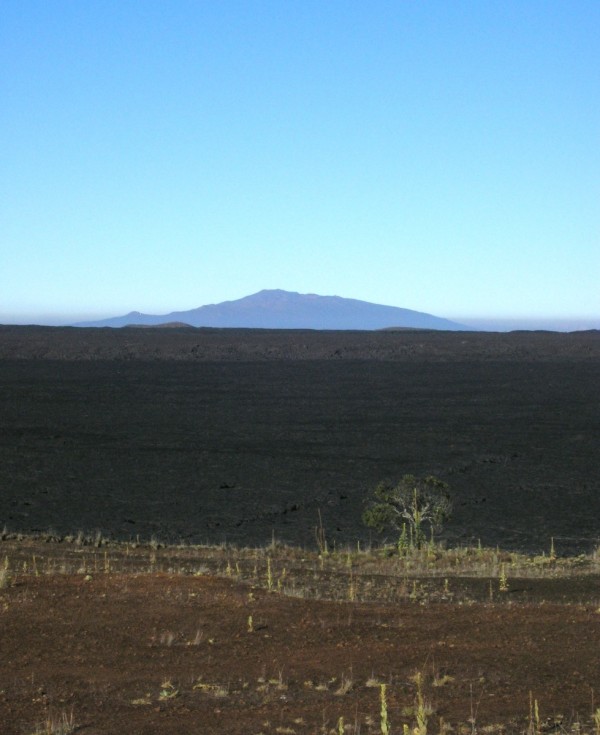
Hualalai. Photo: Chris Rowan, 2012.
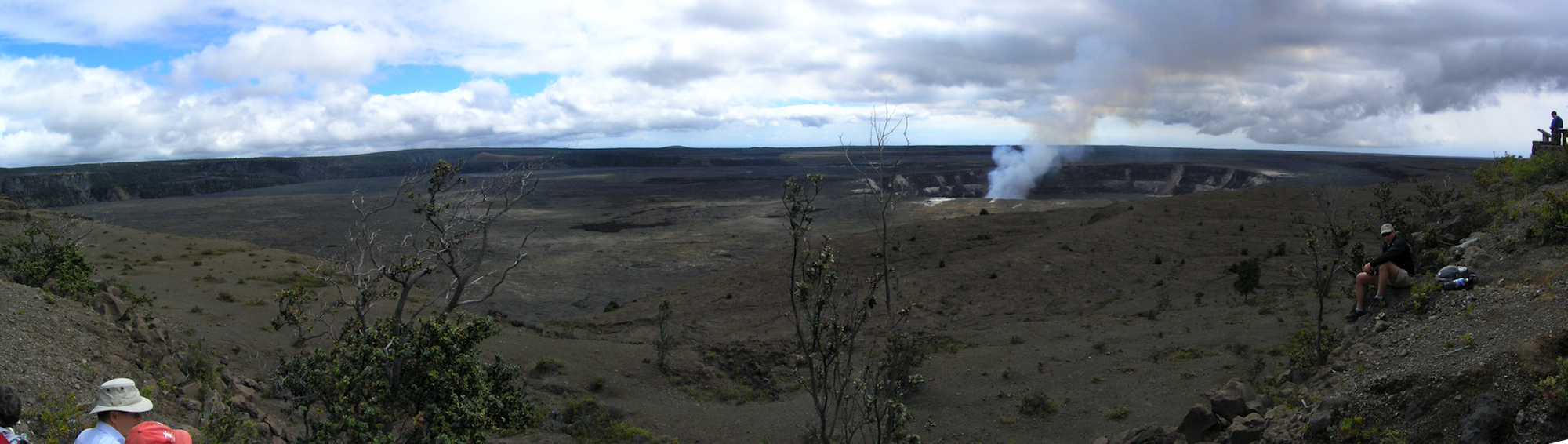
But the Big Island is not just the home to fully grown and aging volcanoes; at least one is still growing – fast! Over on the east coast, closer to the present location of the mantle hotspot, the lower slopes of Mauna Loa are covered by a bulge of lava erupted from the youngest, and most active, volcano on the island: Kiluaea. Topographically, Kiluaea is still in the shadow of Mauna Loa – even when you visit the summit caldera you might hardly feel like you’re on a mountain at all – a sensation not helped by the very shallow slopes all those runny basalt lava flows form. In fact, as I’ve as I’ve discussed before, volcanic eruptions on Kiluaea are hardly confined to the summit, regularly occuring along a rift zone that runs roughly northeast from the summit caldera all the way down to the coast. The current focus is Pu’u O’o, which has been continuously erupting since 1983. Today, Kiluaea may be small compared to Manua Loa, but give it a couple of hundred thousand years and the pecking order might well be reversed.
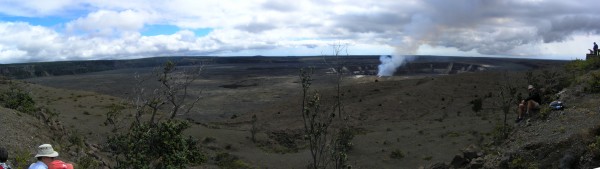
Halema'uma'u Crater at the summit of Kilauea. Photo: Chris Rowan, 2012.
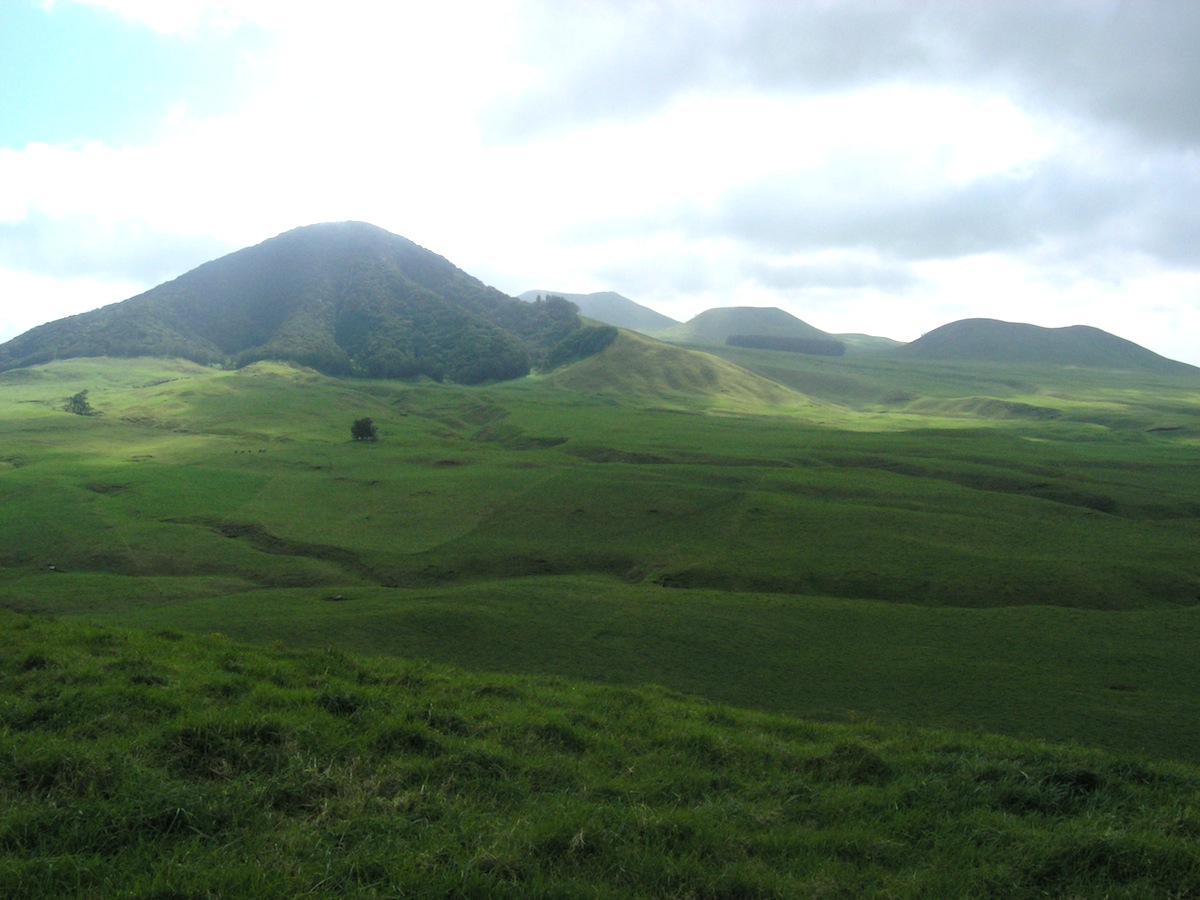
Finally, at the other end of the scale – and the other end of the Big Island – we have a volcano that is definitely dead. Kohala, in the northwest corner of the island, hasn’t erupted for at least 100,000 years. The summit, marked by post-shield cinder cones, also shows signs of erosion – observe the channels in the foreground of the picture below.
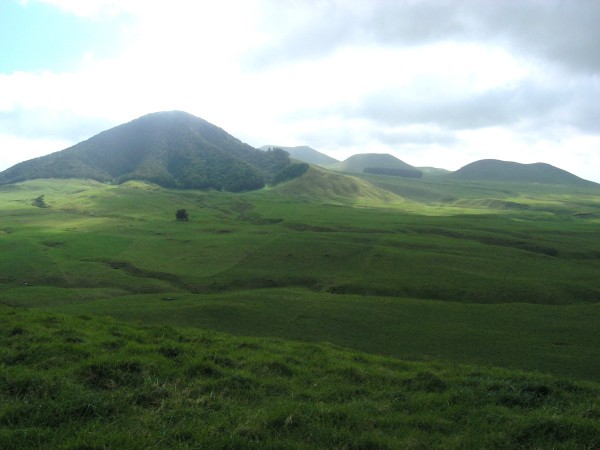
Cinder cones mark the summit of Kohala, the oldest (and therefore most subsided and eroded) volcano on the Big Island. Photo: Chris Rowan, 2012.
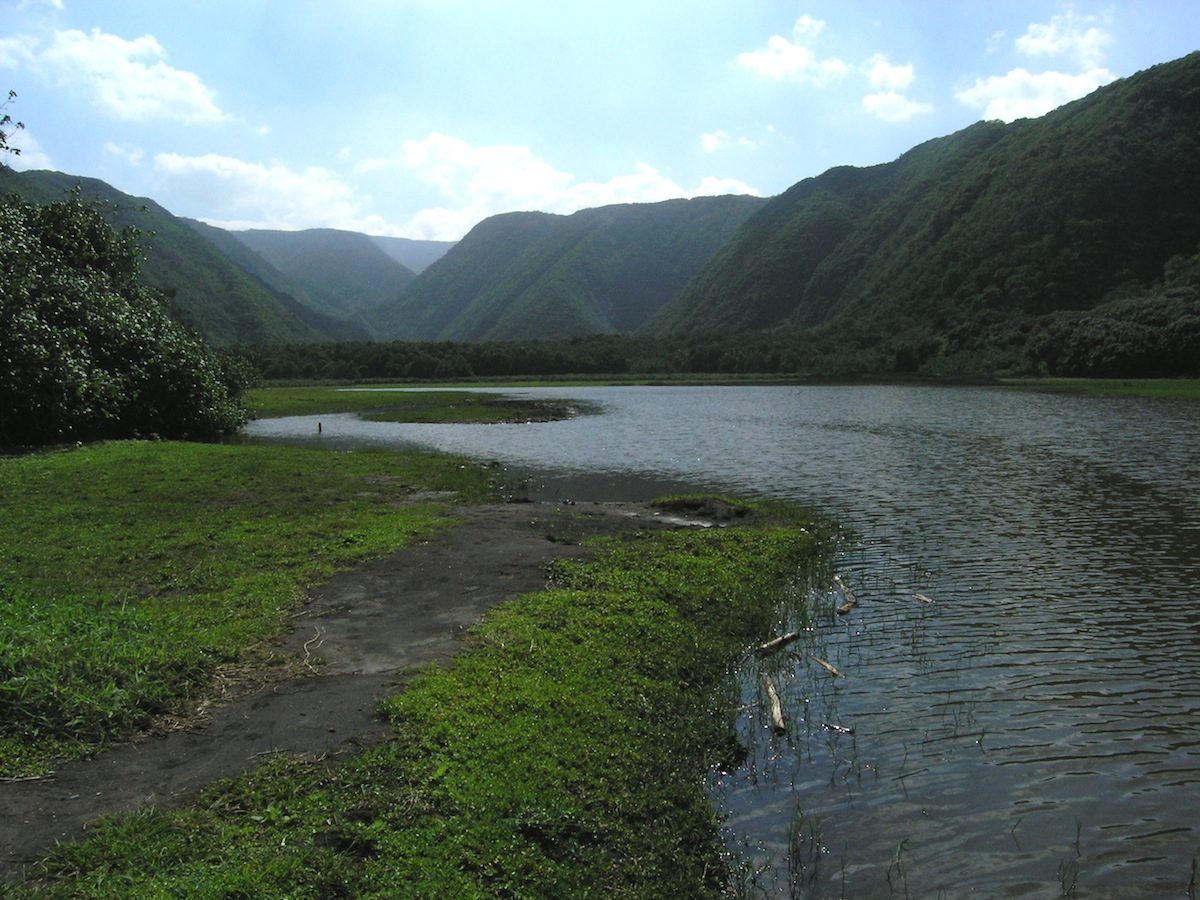
But the most impressive erosion has taken place on the north side of Kohala, where deep and wide valleys have been carved inland from the coast. The steep cliffs, formed by a large chunk of this flank of the volcano destabilising and collapsing into the sea, seem to have accelerated erosion here.
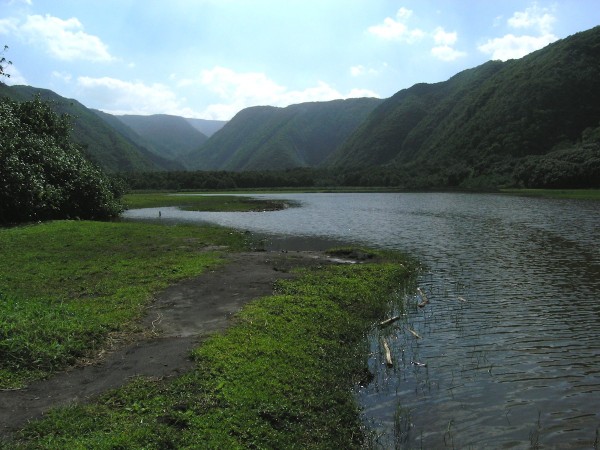
A deeply incised valley on the north flank of Kohala. Photo: Chris Rowan, 2012.
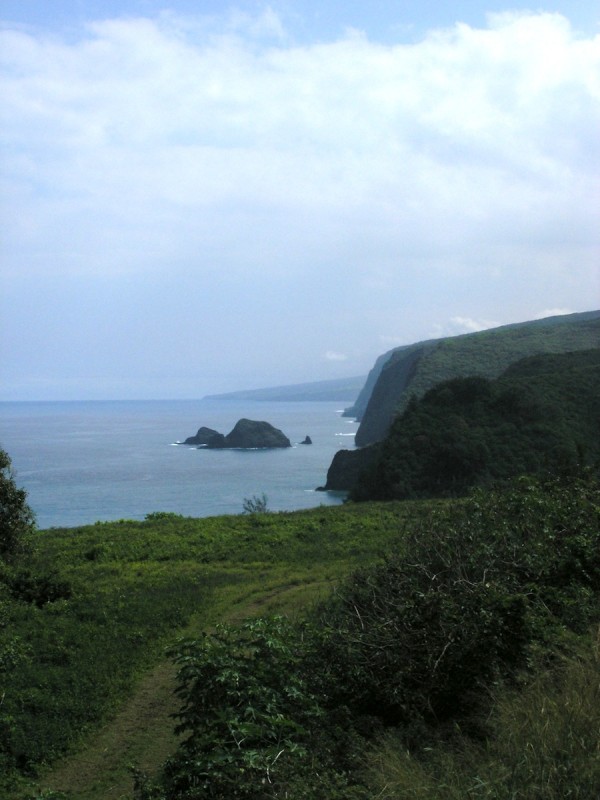
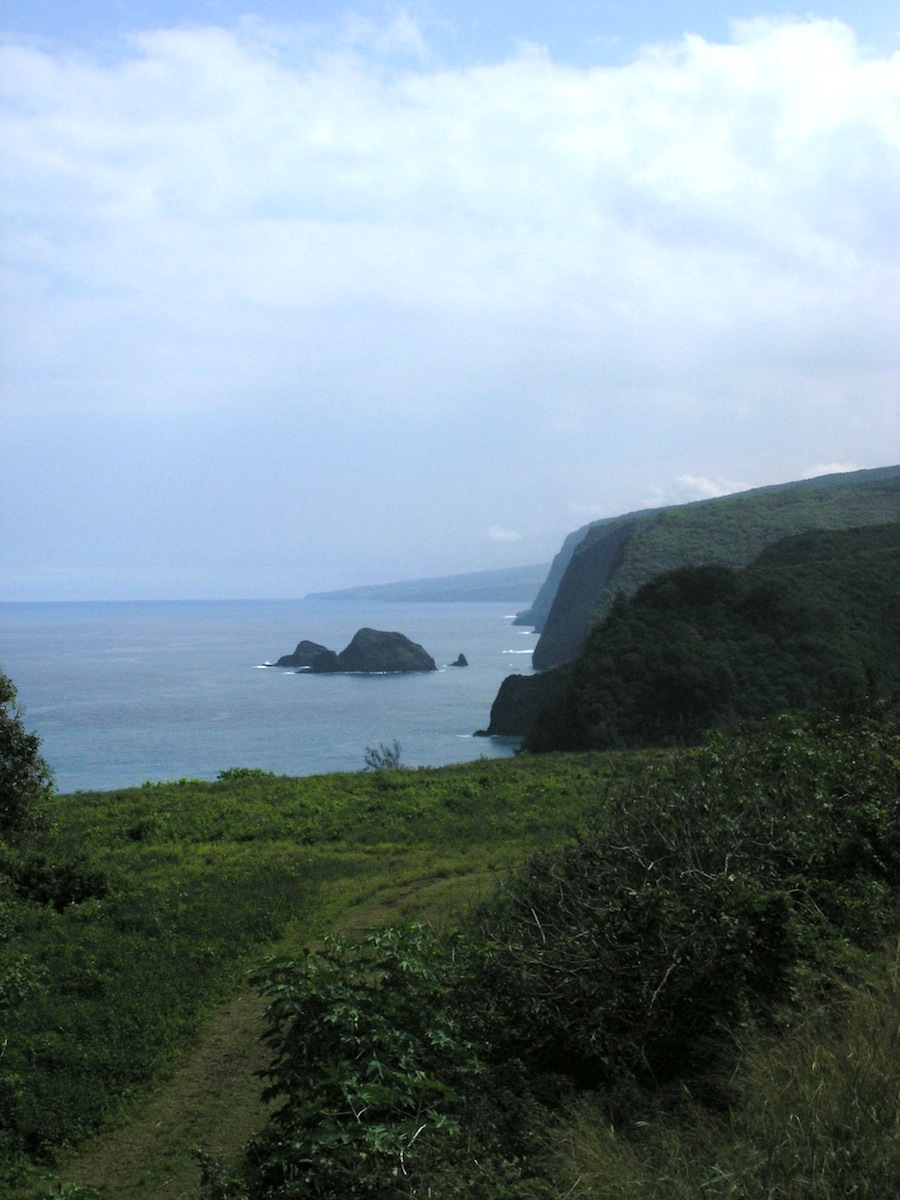
Steep cliffs on the northern flank of Kohala where it meets the sea, possibly formed in a flank collapse. Photo: Chris Rowan, 2012.
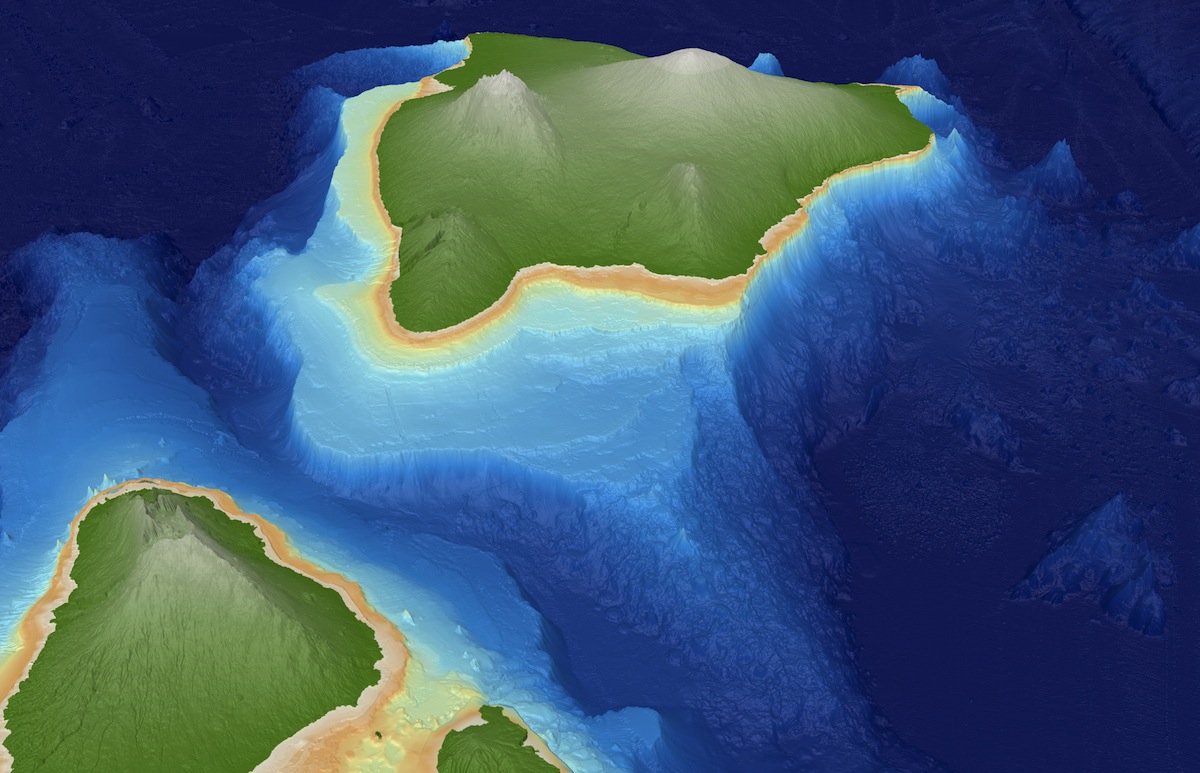
The flank collapse is fairly obvious in multibeam sonar imagery, which also shows how the vast bulk of Kohala is still there – it has just subsided beneath the waves. This is the eventual fate of all of the other islands in the Hawaiian chain: they are all gradually subsiding, eroding and collapsing into the sea.
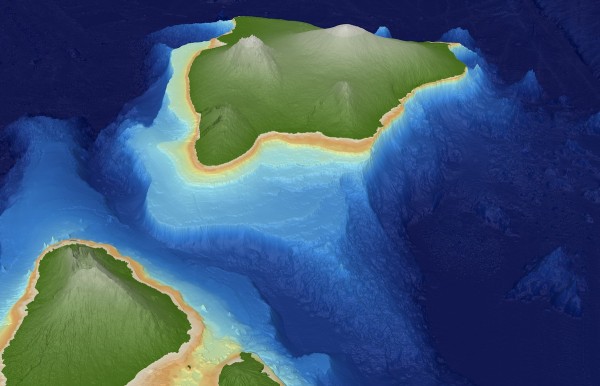
Bathymetric map of Hawaii, looking east with Kohala in the foreground. Source: Hawaii Mapping Research Group
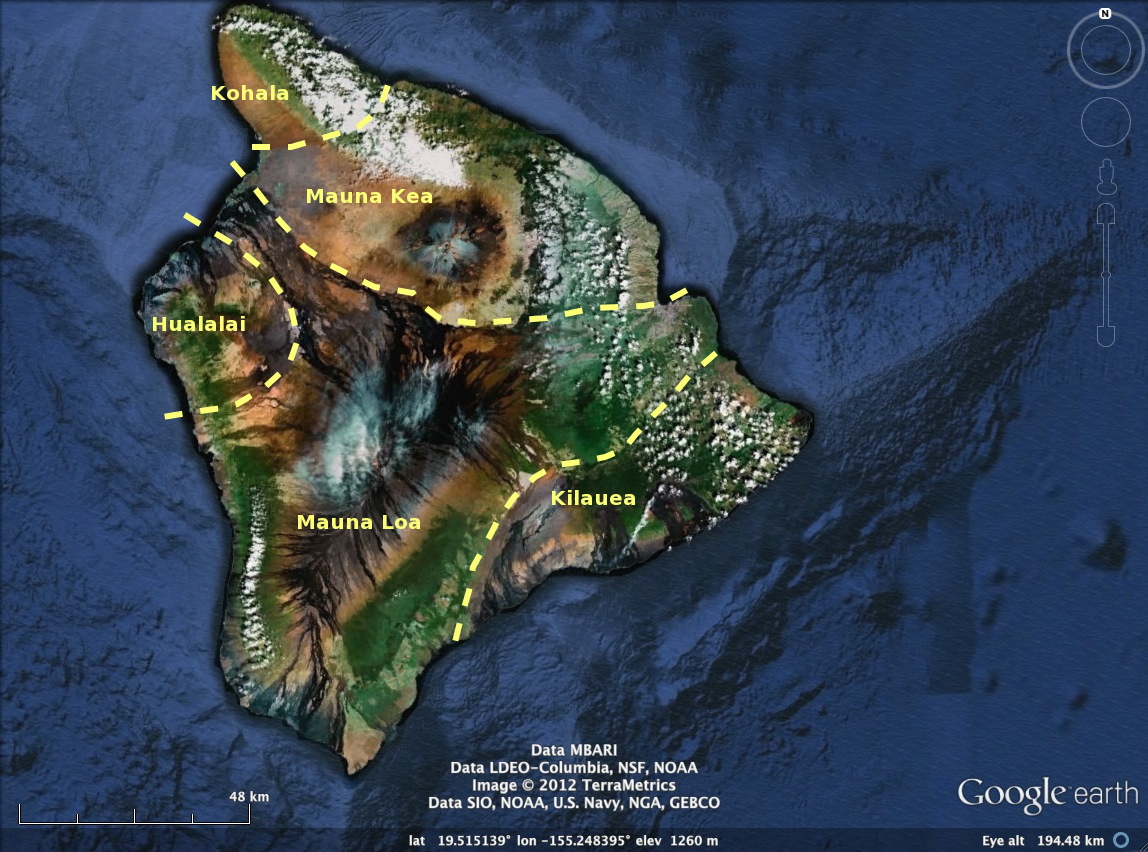
My trip around the Big Island showed me that the textbook description of the life of a volcanic island in a hotspot chain was largely accurate: they grow up from the seafloor, build a big shield, then go extinct, erode and subside back down beneath the waves again. But the shifting of volcanic activity to keep up with the changing position of the mantle hotspot is far more complex than ‘old volcano off – new volcano on!’. It is a more gradual and overlapping process: activity starts at a new vent even as the old one still stutters along for a while, and the shifts in position are small enough that the new volcano literally grows on and around the older ones. This meant that by travelling from east to west across a single island, I could see all of the different stages in the life of a hotspot volcano, from birth to death and dismemberment, without ever having to board a boat – although if I had, the older islands further west would doubtless have been even more dissected than Kohala is.
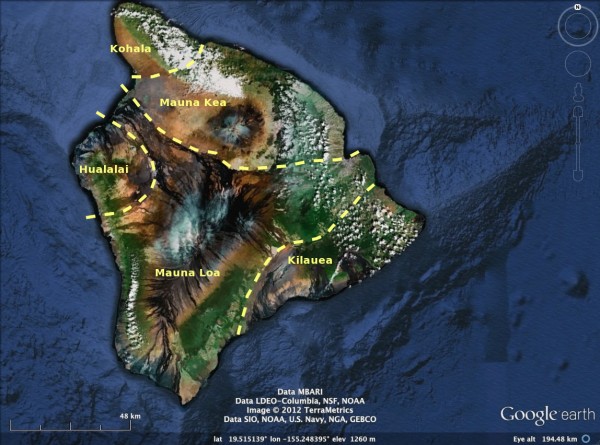
Google Earth view of the Big Island of Hawaii, with its 5 distinct volcanic edifices labelled.