Here comes the sun…

A post by Anne JeffersonThe Earth’s axis has a 23.44o obliquity or tilt to it. As the Earth revolves around the Sun over the course of a year, the axial tilt means that different parts of the Earth’s surface receive direct sunlight at different times of the year. And it’s this receipt of varying intensities of solar radiation that drives temperature differences, and hence seasonality.
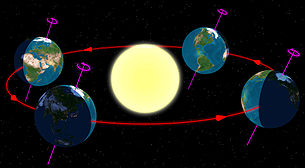
Today is a solstice, illustrated by the image on the far right below. Today is the day of the year when the Northern Hemisphere is tilted farthest away from the sun and the Southern Hemisphere is tilted most towards the sun. For those of us in the Northern Hemisphere, it’s our shortest day of the year and the sun never gets very high in the sky, even at noon. In fact, the word solstice has a Latin origin in the word solstitium, where “sol” means sun and “stitium” means stoppage. and for several days around the solstice this noontime elevation appears to be the same – hence the stoppage. Today, the noontime sun appears directly overhead along the Tropic of Capricorn, 23.44o S.
305px-North_season.jpg
Figure 1. Earth at the solstices and equinoxes, as seen from the north. Source: Wikimedia.
The precise moment of the solstice occurs at 17:47 UTC (12:47 pm Eastern Standard Time). We’ll have another solstice (image on far left) on 21 June 2010 at 11:28 UTC ( 7:28 am Eastern Daylight Time). Over the course of the Earth’s trip around the Sun there will be two moments when everybody is getting their fair share of sunlight – the equinoxes. In 2010, they’ll occur on 20 March 2010 at 17:32 UTC and 23 September 3:09 UTC (22 September 11:09 pm EDT).
Earth’s tilt also varies over geologic time. It has a ~41-thousand year cycle, and right now we’re at about the middle of the range in variation of axial tilt. As tilt increases, seasonal contrasts over much of the world increase, but it is decreased axial tilt is tied with the onset of continental glaciation. That’s because at high latitudes, when tilt is low, summers are even cooler, and more snow persists through the summer. That surviving snow forms the nucleus of glacial ice caps. We’re currently on the decreasing limb of the obliquity cycle, but based on past occurrence of continental glaciations, the onset of another one is going to require not just less obliquity, but also the right eccentricty and precession in the Earth’s orbital parameters and controlling greenhouse gas emissions.
axialtilt-big.png
Figure 2: Last seen at Clastic Detritus in 2007, original created by Slumbering Lungfish.

Categories: by Anne, planets

Titanian lakes: seeing is believing

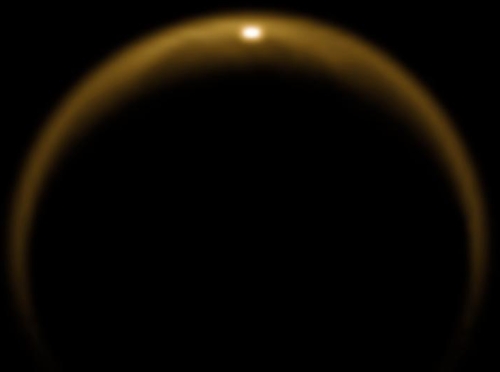
A post by Chris RowanHere’s another cool image from Cassini, showing sunlight glinting off the surface of a lake in Titan’s northern hemisphere.

Titan_glint_of_sun.jpg
Source: NASA/JPL

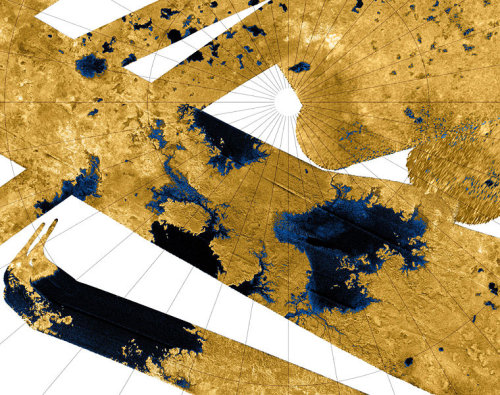
Cassini’s radar has been mapping the lakes for the past couple of years, and we’ve been quite confident in calling them lakes because their smoothness and high reflectivity to radio waves indicate that they are indeed filled with what are probably liquid hydrocarbons. Somehow, though, a picture like this makes it seem more real. True, this ‘eyeball confirmation’ comes in the form of a heavily processed image taken at infrared wavelengths; but it still impresses me.
This is the first time since Cassini reached Saturn that a picture like this would have been possible – Titan’s nothern hemisphere is just emerging from its winter, exposing the lakes to sunlight for the first time in about 15 years. It will be interesting to see what effect the change of seasons may have on them – current thinking seems to be that they will shrink by evaporation, whilst a rainy winter in the (presently drier) southern hemisphere will lead to the growth of new lakes there. Hopefully Cassini will survive long enough too see whether this is the case or not.

Titan_N_Pole.jpg
Titan’s North Pole. Source: NASA/JPL, downloaded from Wikipedia

Categories: planets

Stuff I linked to on Twitter last week

A post by Chris RowanI’ve been a bit remiss in the last month in recording some of the more interesting links I’ve shared via Twitter, but here’s the last weeks’ worth. I’ll try to be more consistent in the future (something which could apply to my recent blogging, too).
Interesting comment(s) on science funding and youthful achievement .
http://metamodern.com/2009/11/27/great-science-great-scientists-and-icons/
http://blogs.discovermagazine.com/intersection/2009/12/18/great-science-great-scientists-and-funding/
(via @SmallCasserole)
Awesome: hacked Wiimote makes a super scientific sensor:
http://www.wired.com/wiredscience/2009/12/wiimote-science/
(via @brianshiro, @wiredscience)
Zoom out into The Known Universe: like the Powers of 10 film on steroids.
(via @kejames, @astrogerly )
http://gizmodo.com/5428733/prepare-to-have-your-brain-exploded-by-this-known-universe-video
The professionals- some thoughts on lecturing:
http://somebeans.blogspot.com/2009/12/professionals.html
(blog post by @SmallCasserole)
Incredible video of undersea volcanic eruption – can totally see how pillow basalts form.
http://www.youtube.com/watch?v=x5j4nAVZAJw
(via @geologynews)
Two direct hits in dark matter hunt -If real LHC may produce dark matter particles. Exciting.
http://www.nature.com/news/2009/091217/full/news.2009.1151.html
(via @NatureNews)
Wired.com video asks: why do geologists love beer?
http://www.wired.com/video/science/science/46205328001/why-do-geologists-love-beer-wired-science-investigates/57975246001
(via @theAGU)
The Quackometer: James Randi, Global Warming and the Nature of Scepticism
http://www.quackometer.net/blog/2009/12/james-randi-global-warming-and-nature.html
(via @lecanardnoir)
Hot, watery Earth-Like exoplanet found right next door.
http://www.wired.com/wiredscience/2009/12/super-earth/
(via @Evan_Lerner, @wiredscience)
Great discussion of why rational discussions of energy/climate crises never seem to get media traction. Killer quote: “The oil and gas business is a bunch of holes in the ground with liars on top”.
http://scitizen.com/stories/climate-change/2009/12/Real-Solutions-to-the-Energy-and-Climate-Crises/
‘Super-Earths’ orbit nearby stars From ground obs., very close orbits, <10x Earth mass.
http://news.bbc.co.uk/1/hi/sci/tech/8414476.stm
Wow! Running crinoids! (crinoids being ‘sessile’ echinoderms)
http://schmunda.blogspot.com/2009/12/run-crinoid-run.html
Principles on scientific advice to UK Government published.
http://nds.coi.gov.uk/clientmicrosite/content/Detail.aspx?ReleaseID=409612&NewsAreaID=2&ClientID=431
(via @BIS_Science)
Incredible photo of Mayon volcano, Philippines, 14 Dec:
http://www.msnbc.msn.com/id/34424240/displaymode/1168/rstry/33844969/rpage/1/
(via @sciwo, @Colo_kea)
Black Soot and the Survival of Tibetan Glaciers make sure to check out video.
http://earthobservatory.nasa.gov/IOTD/view.php?id=41854
(via @kablukiw, @NASA_EO)
Good overview of CRU e-mail palava. Yes I know, but this one has some nice figs.
http://www.liberalconspiracy.org/2009/12/14/9845/
How climate change sceptic Ian Plimer dodges valid criticism.
http://www.guardian.co.uk/environment/blog/2009/dec/14/climate-change-sceptic-ian-plimer
(via @ClimaTweets)
Merging social media and gov’t data–learn how YOU can help augment USGS earthquake products with your tweets.
@USGS)
Free software to simulate dinosaur locomotion (and other more boring animals).
http://www.animalsimulation.org/

Categories: links

Gifts for future hydrologists

A post by Anne JeffersonDoing some last minute shopping for the young’uns on your list? Want to inspire a love and respect for the natural world? Then take the kid outside for a hike up a mountain or splash in a stream and let them experience first-hand how amazing Earth’s landscapes can be.
But if you want to give something a bit more material, then here are a couple of water-themed books I recommend for kids. Most of these have been tested on my almost 3-year-old, so my age recommendations have only one true calibration point.

For preschoolers

water-dance-thomas-locker-hardcover-cover-art.jpg

“I pass through a gateway
of high stone palisades,
leaving the land behind.
Cool silver moonlight
sparkles and dances
on my waves.
I am the sea.

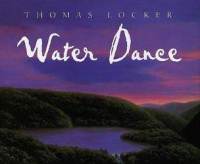
Thomas Locker’s Water Dance follows the water cycle with lyrical prose and beautiful paintings to accompany each store of water. Locker’s lovely paintings could also be used without the text, just as a way to point out waterfalls, storms, oceans, etc. and to spark a conversation with a young child about their experiences with rain or other hydrological phenomena.

Where the River BeginsMany preschoolers prefer listen to stories with a clear plot, and might have a hard time identifying with the sea, stream, and storm of “Water Dance.” If you think that’s the case for the preschooler on your list, I recommend another Thomas Locker book, “Where the River Begins.” In this book, two boys and their grandfather set out on a hike to find the source of the gentle, meandering river that flows past their house. They trace the river to a rapidly cascading mountain stream that begins in a quiet pond. On the way home, they get caught in a rain storm which floods their path. There’s some hydrology embedded in there, but msotly a clear narrative for the plot-driven preschooler. My daughter approves of this book.
A Drop Around the WorldFor early elementary age readers
A Drop Around the World
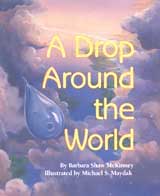
by Barbara McKinney is an amazing book that follows a single water molecule from raindrop on the Maine coast to glacier melt in Switzerland to a monsoon flood in India and back to the eastern U.S, with many more stops along the way This vividly colorful book uses the water molecule as narrator and has nifty little symbols for the phases and their changes. It also emphasizes the trans-cultural importance of water. Young readers can hunt for the water droplet with the smiley face hiding on each page. The last two pages provide a legend for the little symbols giving more hydrological info for adults or interested kids. There’s also an educators’ guide to go with the book. My nearly 3-year old liked looking at the pictures, but the story hasn’t drawn her in quite yet, so I’d put this book in the 4+ age range. Perhaps it’s that plot and character identification problem again…
Letting Swift River GoJane Yolen’s Letting Swift River Go tells the tale of the damming of the Swift River in western Massachusetts to form the Quabbin Reservoir in the 1920s and 1930s. The story is told from the point-of-view of a young girl who watches her hometown and the surrounding farmlands and forests disappear under the rising waters. I really like this book because it integrates issues of water and society within a compelling narrator with whom children can identify. I put this book in the early elementary category, but my daughter has enjoyed listening to the story, though it verges on the long side for her attention span. I look forward to many more years of reading this story with her and the discussions I am sure it will engender as we walk in the reservoir-side parks along our local Catawba River.
tree-rings-fleck.jpgFor older kids
One book I haven’t read yet, but which I am anxious to get my hands on is John Fleck’s “The Tree Rings’ Tale: Understanding Our Changing Climate.” Fleck is an outstanding science journalist at the Albuquerque Journal and water blogger. The early reviews of his new book have been highly complimentary, and I love the idea of how he interweaves a history of the Colorado River with the science of dendrochronology and climate change.

Though not exactly a fly-fishing or white-water rafting trip, or even a walk along your local creekside greenway, the books above still make fine gifts and may even spark inspiration in a future hydrologist.

Categories: by Anne, gifts and gadgets, science education

A new theory on what powers the Earth’s magnetic field

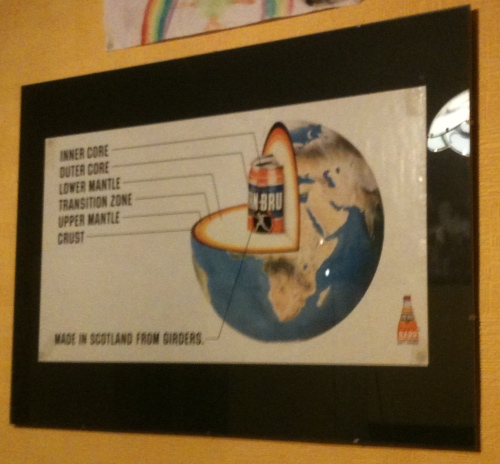
A post by Chris RowanI have, in the past, tried to explain how the Earth’s magnetic field is generated by convection in the Earth’s molten outer core. Here, in Scotland, however, it seems that they have their own ideas (sorry for the poor picture quality):

IRNbru.JPG

If you’ve never experienced the excessively scary orangeness of Irn Bru, Scotland’s other natural drink, then you’ve missed out on supping a heady brew that probably contains more additives than water. Perhaps, then, the magnetic field is merely a side-effect of a planetary interior stimulated into hyperactivity by all the artificial colourings.

Categories: bloggery