

Announcements
- Anne’s wonderful post, ‘Levees and the illusion of flood control‘, has been nominated for the 2011 3 Quarks Daily Prize in Science. There is currently a round of public voting, with the 20 most popular of the 79 entries going forward to the judging panel. As Lab Lemming has noted, there are a number of other earth science posts also up for the prize. Please consider heading over to vote for your favourite here:
http://www.3quarksdaily.com/3quarksdaily/the-nominees-for-the-2011-3qd-prize-in-science-are-.html - Chris has been playing around with Storify and Tumblr, with the result being a new project to archive more permanently some of the interesting discussions amongst the geological community on Twitter:
http://geotweeps-discuss.tumblr.com/
If any other people would like to participate in this archiving effort, drop Chris a line.
Earthquakes & Tectonics
- Stress transfer from Japan earthquake appears to increase earthquake risk elsewhere – including for Tokyo
http://www.whoi.edu/page.do?pid=7545&tid=282&cid=102609&ct=162
(via @geozon) - Nice post on the Landslide blog on Rupture mechanics of the Japan Earthquake, and landslide problems in the aftermath http://blogs.agu.org/landslideblog/2011/05/31/rupture-mechanics-of-the-japan-tohoku-oki-earthquake-and-landslide-problems-in-the-aftermath/
- Earthquake education, plans saved students in Japan earthquake. Preparation works, people!
http://www.upi.com/Top_News/World-News/2011/06/03/Earthquake-education-plans-save-students/UPI-78061307142738/
(via @CPPGeophysics, @upi_top) - It seems the latest seismic hazard assessment for Christchurch has been a tad overblown by the media. Don’t panic, New Zealand!
http://sciblogs.co.nz/shaken-not-stirred/2011/06/01/christchurch-no-more-risky-than-wellington-but-does-that-make-a-good-news-story/ - A new study claims that the death toll of the Haiti earthquake was much lower than has been claimed. Of course, any method of sample-based, counting, including this new tally, is going to have its flaws. And 60-80,000 is hardly low…
http://www.npr.org/blogs/thetwo-way/2011/05/31/136832070/report-death-toll-in-haiti-earthquake-much-lower-than-government-estimates
http://open.salon.com/blog/timotuck/2011/05/29/haitis_questionable_earthquake_death_toll
(via @CPPGeophysics, @nprnews) - 3 Gorges Dam triggered 3,000 earthquakes (mostly
(via @CPPGeophysics) - Nice article on GPS network monitoring deformation of Pacific NW and Cascadia subduction zone http://bit.ly/lUn8TK
http://seattletimes.nwsource.com/html/localnews/2015183992_gps30m.html
(Paleo)climate
- Sickening. Death threats towards Australian climate change scientists
http://www.canberratimes.com.au/news/local/news/general/climate-of-fear-scientists-face-death-threats/2185089.aspx
(via @podblack, @szvan) - I like this post by @WanderingGaia: Now we are gods: Welcome to the Anthropocene
http://wanderinggaia.com/2011/06/03/now-we-are-gods-welcome-to-the-anthropocene/ - The Economist on the Anthropocene: ‘piecemeal actions can quickly add up to planetary change.’
http://www.economist.com/node/18744401?frsc=dg|a - Great @newshour with @KHayhoe & Jeff Masters on climate change, tornadoes, and floods. What links can’t we draw?
http://youtu.be/KNbHa3zbwjU - Nice clear explanation by @UncoveredEarth on why Portland has the wet reputation, but is really drier than many US cities http://uncoveredearth.com/2011/05/31/it-may-usually-rain-but-its-not-as-wet-as-you-think/
- Study maps global ‘hotspots’ of climate-induced food insecurity. India and W Africa are especially vulnerable.
http://www.sciencedaily.com/releases/2011/06/110602204807.htm - Record CO2 emissions last year. “The only people who will be surprised by this…have not been reading the situation properly”. Quite.
http://www.guardian.co.uk/environment/2011/may/29/carbon-emissions-nuclearpower
Water
- Increased flood risk in California under climate change by @jfleck
http://www.inkstain.net/fleck/?p=5684 - Drought in China, and downstream impacts of the Three Gorges Dam [NY Times]
https://www.nytimes.com/2011/06/03/world/asia/03china.html?_r=1&partner=rss&emc=rss - Plans For Dams In Patagonia Draw Ire From Chileans-More at
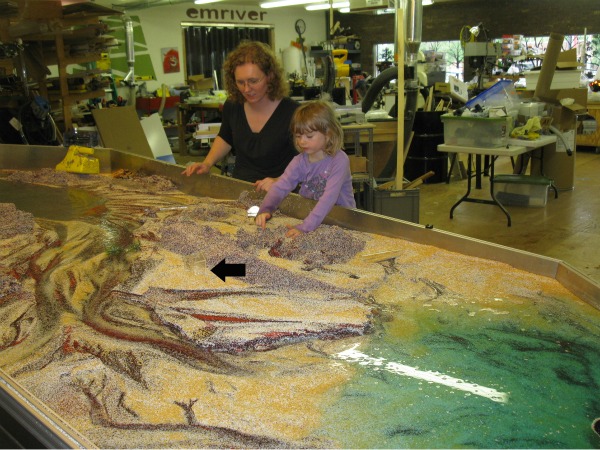
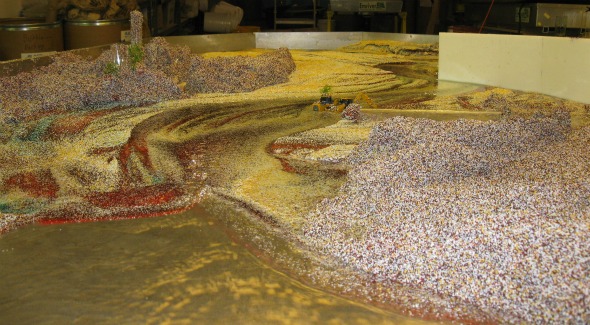
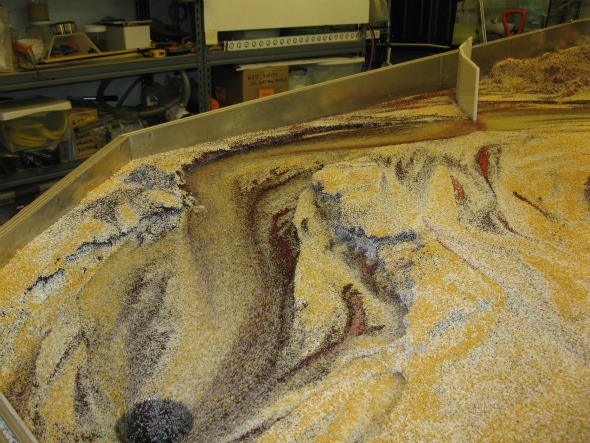
http://www.npr.org/2011/06/01/136855319/plans-for-dams-in-patagonia-draws-ire-from-chileans - The landscape/architecture blog ‘mammoth’ has been posting about rivers for past week, here’s a link to one of the posts:
http://m.ammoth.us/blog/2011/06/red-river-landing/
(via @clasticdetritus) - Some scary facts in this presentation: Tapped Out: The Drying Up of Atlanta.
http://www.chattahoochee.org/tapped-out.php
(via @DragonflyWoman2) - Funding from @NSF_GEO helps discover the mystery behind "rock snot" – algae blooms in pristine streams.
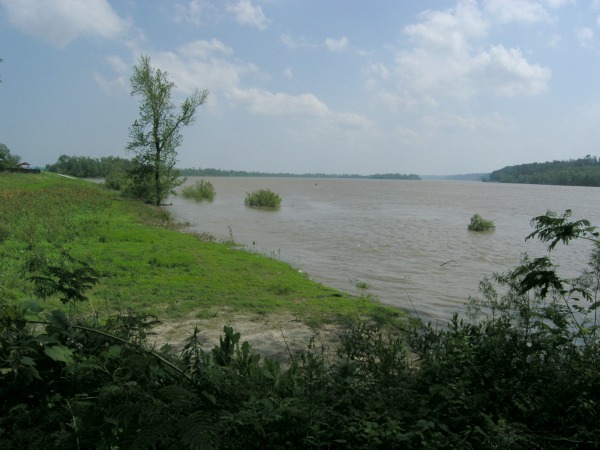
http://www.nsf.gov/news/news_summ.jsp?cntn_id=119700&WT.mc - In Pierre, river views go ‘from beautiful to scary’ as Missouri floods
http://www.argusleader.com/article/20110603/NEWS/106030301/In-Pierre-river-views-go-from-beautiful-scary-
(via @climatebrad) - Iowa towns brace for record flooding along Missouri River. River could stay high until December!
http://www.desmoinesregister.com/article/20110603/NEWS/106030326/Towns-brace-for-flooding-along-Missouri-River
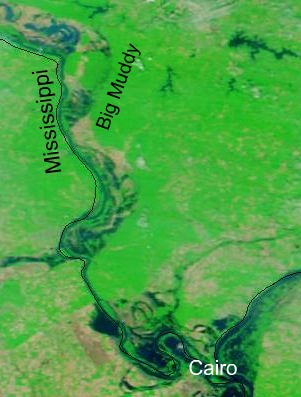
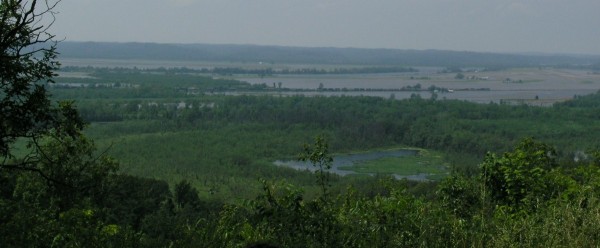
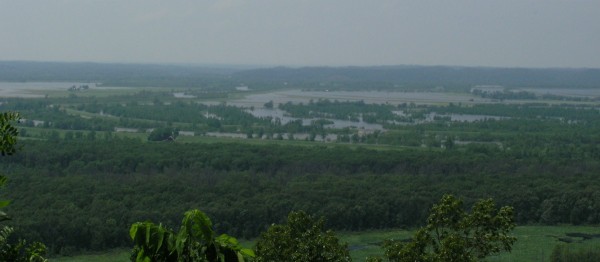
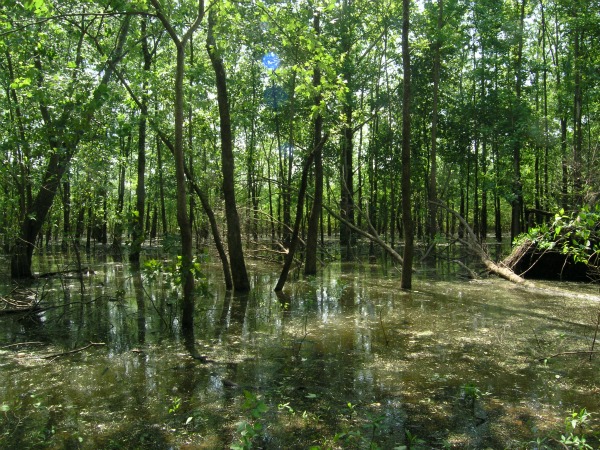
(via @MGhydro) - Lower Mississippi River Remains Swollen
http://earthobservatory.nasa.gov/NaturalHazards/view.php?id=50785
(via @NASA_EO) - Cool (big) image of western US snowpack (with implications for floods in Western US)
http://www.nnvl.noaa.gov/images/high_resolution/749_20110603-SnowMelt.jpg
(via @JustinNOAA) - Trends in the timing and magnitude of floods in Canada – a nice paper analysis at Pawn of the Pumice Castle
http://pumicecastle.blogspot.com/2011/05/papers-im-reading-trends-in-timing-and.html - The Columbia River is in flood, and there’s been far worse in the past. http://www.kgw.com/news/local/High-water-creates-anxious-moments-for-Vanport-Flood-survivors-122778989.html
- Fantastic video demonstration of laminar flow: http://www.youtube.com/watch?feature=player_detailpage&v=p08_KlTKP50#t=36s
(via @ProfessorFunk, @Sciencegoddess)
Environmental
- UK report estimates the substantial hidden economic value of parks, lakes, forests, wildlife. But will it alter policy?
http://www.bbc.co.uk/go/rss/int/news/-/news/science-environment-13616543 - Depressing in so many, many ways: Madagascar fears repeat of Canada’s tar sands devastation
http://www.theecologist.org/News/news_analysis/921581/madagascar_fears_repeat_of_canadas_tar_sands_devastation.html
(via @geographile, @Earth_News) -
The incredible shrinking public attention span. BP oil spill: Forgotten but not gone
http://www.latimes.com/news/opinion/commentary/la-oe-wohlforth-bp-20110420,0,5230359.story
(via @yalefesclimate) - Indonesian Mud Volcano Marks 5 Years
http://www.voanews.com/english/news/asia/Indonesian-Mud-Volcano-Marks-5-Years-122801959.html - Unexpected methane source – biodegradable products in landfills. Oops.
http://www.usnews.com/science/articles/2011/06/02/biodegradable-products-may-be-bad-for-the-environment
(via @naturenews, @NatureGeosci) - Gulf dead zone & link to Midwest agrochemicals known for years. Question is how to solve problem. Mississippi flood carrying so much #pollution downstream that this year’s dead zone is likely to break its size record
http://www.nytimes.com/2011/06/03/science/earth/03runoff.html?_r=1 - Sinkhole formed by leaking pipe "swallows" soccer player in NC h/t Dave Petley [Urban hydrogeology hazard!]
http://www2.morganton.com/news/2011/may/26/sinkhole-swallows-teen-soccer-player-ar-1065198/
Planets
- Great summary of some interesting recent studies: subsurface life on Earth, Mars is an embryo, and the Moon may not be so unusual.
http://lifeunbounded.blogspot.com/2011/06/nematodes-mars-and-moons.html?spref=tw
(via @caleb_scharf)
General Geology
- The latest edition of the Accretionary Wedge geoblog carnival looks at the weird corners of the geological world: http://entequilaesverdad.blogspot.com/2011/05/accretionary-wedge-34-weird-geology.html
and the call for the next edition is already out: Evelyn wants your Favorite Geology Words:
http://georneys.blogspot.com/2011/06/accretionary-wedge-35-whats-your.html?utm_source=twitterfeed&utm_medium=twitter - The stratigraphic architecture of sandwiches . Definitely some folding on Feb 6 & cross-bedding on Feb 28 😉
http://scanwiches.com/
(via @clasticdetritus) - Loss of life in seismic landslides from the Landslide Blog [fascinating data]
http://blogs.agu.org/landslideblog/2011/05/13/the-third-anniversary-of-the-wenchuan-earthquake-loss-of-life-in-seismic-landslides/ - Geology paper on how we may have been under-estimating paleo-elevations using isotopes because of climate change
http://geology.gsapubs.org/content/39/6/595.abstract?etoc
Interesting Miscellaney
- The deep biosphere expands: nematodes found 1.3 km deep in South African gold mine. Fascinating stuff from Ed Yong. The story that launched a thousand Lord of The Rings analogies.
http://blogs.discovermagazine.com/notrocketscience/2011/06/01/meet-mephisto-the-worm-that-rules-the-underworld/ - Why blogs can cover the sciencey parts the mainstream media will never reach. A great post from Brian Romans.
http://www.wired.com/wiredscience/2011/05/surpising-important-or-weird-and-fun/ - Extremofiles: "It’s not a safety issue; people are being inattentive"… Or a plea for lab safety by @Annie_Onymous
http://extremofiles.blogspot.com/2011/06/its-not-safety-issue-people-are-being.html?spref=tw - @geogirldi muses on recruitment in geology with her post on"The Glamorous Paleontologist" with TMBG for a soundtrack
http://eatsleepgeology.blogspot.com/2011/05/glamorous-paleontologist.html - Obstacles to the recruitment of minorities into the geosciences: A call to action Open access from @geosociety
http://www.geosociety.org/gsatoday/archive/21/6/article/i1052-5173-21-6-52.htm - Helpful list of SI unit rules. I’ll be giving this to my students next year. http://physics.nist.gov/cuu/Units/checklist.html (via @JacquelynGill)
- John Hawks has an enjoyable take-down of the undying ‘Internet makes us stupid’ meme. Of course, in my experience, when someone says ‘the Internet makes us stupid’ they really mean ‘the Internet makes YOU stupid’.
http://johnhawks.net/weblog/topics/social/cogtech/lehrer-echo-chamber-2011.html
(via Dhunterauthor) - Is a kettle or the hob the most efficient way to boil water? I knew the result of this experiment, although I was surprised by how much the difference was.
http://jakirkpatrick.wordpress.com/2011/05/28/what-is-the-most-efficient-way-to-boil-water/
(via @uksciencechief) - Great post by Lockwood on hubris, the one true universal human trait
http://outsidetheinterzone.blogspot.com/2011/05/we-had-been-told-this-mighty-ocean.html - As the arsenic life controversy rears its head in the news again, here’s a great outline of why it is so chemically unlikely, even if ‘geologists’ are tarred with a rather broad brush.
http://www.ffame.org/ATemptingScience/?p=41