Christmas gifts for geologists: cameras

Other suggestions: [Beverages] [Tough Gear] [Maps]
The arrival of digital photography is one area where technology has really changed the geological fieldwork experience. Of course, photos will never completely replace a good sketch, but when there’s only so much time you can spend at an outcrop, the ability to thoroughly document what you’re seeing, and review your photos on the fly to ensure that you’ve captured things properly, is a real boon. Plus, it gives us lots of cool photos, both geonerdy and just plain jealousy-inducing, to share with all and sundry.
So what do geologists look for in a camera? That’s a tough question of course, because everyone has slightly different preferences. But from a professional perspective, there are several features that I feel are particularly important:

  • A nice wide angle lens, for wide shots of landscapes (and outcrops). For me, this is much more important than the magnitude of the zoom, especially since in my experience you need a pretty high zoom factor for it to actually do more than make small things look a little bit larger.

  • A good macro mode. Essential for all those close-ups of things like ripples and microfossils.

  • The ability to manually adjust exposure, etc. Partly this is just because I’m a bit of a gadget boy, and like playing around with technology. But partly it’s that the most interesting features that you want to photograph aren’t playing nice with the ambient lighting, and you need to make some adjustments to ensure that they actually show up.

  • Good battery life. This is particularly important now that most cameras do not take normal batteries; these rechargeable lithium thingies are all very well until your camera dies when you’re stranded miles from the nearest electrical socket.

  • Toughness. Because I’m not just going to be using it on a walk through a park on a sunny day.

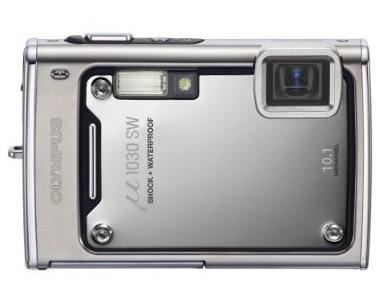
Since these features can be mutually exclusive (particularly in the balance between functionality and toughness), camera selection becomes a matter of finding an acceptable balance between these features. I currently own an Olympus 5060 Wide Zoom, which takes some pretty nice pictures (almost all of the photos I’ve put up on this blog were taken with this camera), and has a fabulous macro mode. But it is a little bulky, and I always fret about it when I take it out in bad weather. Perhaps because of this, I’ve recently been thinking about the Olympus 1030 SW:
Mju1030SW.jpg

According to the specs, this thing is tough: shockproofed against drops, fully waterproof to 10m depth (although I assume, like watches, that’s static pressure), dustproof, and even hardened against low temperatures (down to -10C). I know someone with an earlier model in this range who has used it for underwater photography, so it seems that these are not entirely idle boasts. The appeal is that it’s small enough to fit in your jacket pocket, and tough enough not to care. Of course, this is a camera more in the point-and-click vein that I’d usually like, and I’ve also never been that keen on cameras with no viewfinder.
Everyone should feel free to pitch in with their own views on this one. What features do you look for in a camera? What camera(s) do you actually possess? How do you rate them?
Categories: field gear, fieldwork, gifts and gadgets

Christmas gifts for geologists: field beverages

Other suggestions: [Cameras] [Tough Gear] [Maps]
Finding an appropriately rock-orientated present for a geologist might seem a daunting task to the outsider. Raiding an outdoors shop can be risky, since they already seem to own more field gear than normal clothes; whilst buying them a pretty rock risks getting “Humph, it’s only quartz.” So, for those of you who are currently tempted to give up and give them a gift voucher, over the next few days I’ll be discussing a few possible options which would certainly go down well with my inner rock geek, so might also win you brownie points with the ones in your own life. The comments will doubtless provide agreements, disagreements and further suggestions from the rest of the geoblogosphere.
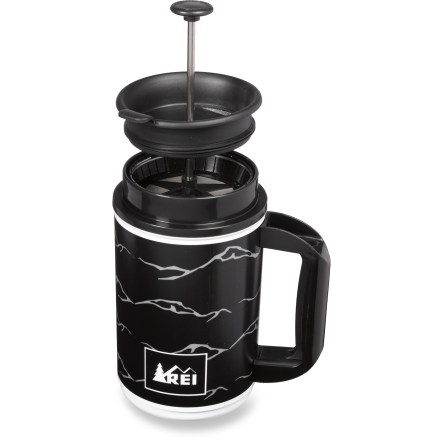
First up, there is the issue of liquid refreshment in the field, particularly the pressing issue of how the hell you’re supposed to get a decent caffeine fix when you’re away from civilisation. This is an especially serious problem if, like me, you consider instant coffee to be an abomination. In South Africa, I was eventually driven to taking my little Pyrex desk cafetiere with me on field trips, which was good for me, but not so good for the cafetiere, which at least had the courtesy to get me to the end of the Northern Cape trip in July before cracking up. Fortunately, somewhat more practical (and durable) options exist for field caffeination, in the form of toughened cafetiere mugs: once the coffee has brewed, you push down the plunger, and then drink straight out of them. I’ve looked enviously on ones like this before.

pressmug.jpg

Continue reading

Categories: field gear, fieldwork, gifts and gadgets

Year in blogging 2008

I quite liked this meme last year; it provides an overview of my blogging in the past 12 months, without taking up the time, or the excessive navel-gazing, required for a more traditional retrospective. I also really like Brian’s twist of posting the first image from each month, as well as the first sentence, so I’ve shamelessly borrowed it (in many cases, the image is linked to a different post than the sentence is).


I leave the question of what this all means – other than the fact that I’m fond of early month navel-gazing, and am rather too keen on long and complicated sentences – as an exercise for the reader.

Categories: bloggery

Carnivalling

Just as I was starting to worry about the state of the Accretionary Wedge, we’ve had not one but two calls for posts this week. Over at Geology News, Dave Schumaker will be hosting a late late November edition, and wants us to tell of our favorite places to do field work. Entries need to be in by this Sunday, and I went a little pretentious with mine
Meanwhile. the real December edition is being hosted by Kenneth Clark at the perplexingly-named Office of Redundancy Office, with the theme of “Recent Advancements” (recent and/or noteable advancements that have directly affected your expertise, interests, or the work you do). Entries should be in by Christmas Eve, or he might just post a lump of coal instead.
In the meantime, you might want to check out the (Totally Hot) December Issue of Scientae being hosted by Dr. Isis, not least because her request for explanations why “My Science is Hotter than Dr. Isis’s Naughty Monkeys Because…” was addressed pretty emphatically in the geoblogosphere with variations on a theme of “Because we do geology. Duh”. Oh, and we have better shoes, too (Naughty Monkeys are apparently footwear of some description, but I suspect that they’re about as far from all-terrain footwear as you can get).

Categories: bloggery, links

The best field areas are the ones that you haven’t seen yet

A scarily long time ago, now, I spent a summer walking around a small area in North Wales, just south of Snowdon. This was the field area for my undergraduate mapping project, which was a big turning point in my scientific life, in that the two years prior to this summer kind of sucked, and the years since then have been, on the whole, interesting and fun. At the time, the whole process was not without its frustrations. Trying to distinguish between volcaniclastic rocks directly deposited from volcanic ash flows, and reworked volcanically derived sediments, is not easy; trying to distinguish between the two when they’re almost completely covered with lichens is just a tad harder still. Add a fair amount of stuctural complexity to the niggling uncertainty that you may have wandered over a boundary and just not realised it, and you have a recipe for lots of evenings spent scratching my head as I tried to connect up all the different coloured patches on my field slips into a sensible pattern.
I remember one evening in particular, where I was trying to sort out the details of a particularly complicated area, and not really getting anywhere – or so it seemed. But then, as I squinted at the map in frustration once more, something suddenly clicked. What if- Oh. Yes! But that means- Yes!
I don’t know which bit of my brain had been holding out on me until this point, but suddenly a picture of the regional structure of my area popped into my head – and it all made perfect sense. Even better, this insight allowed me to predict exactly what I should find in the area that I was planning to walk through the next day. The next morning, I followed to route that I’d been planning, and all the different units cropped out pretty much exactly where I’d extrapolated they should.
That was a good day.
And thus, my time in North Wales was one of the first times that I experienced the happy buzz that comes from solving a tricky geological problem or puzzle; suddenly you see past the outcrop that you’re looking at to an environment or a tectonic event long departed, clearly realised in your head. It was certainly the first time that I’d done it all by myself, with no prompting from a lecturer. I wouldn’t be exaggerating if I said that that made me feel pretty damned good; and deeper down, my subconscious quietly noted the fact that maybe, just maybe, I could do this science thing after all.
So, does this make North Wales my favourite field area? Well, no. Because my fond memories are not so much due to the particular rocks there, as they are due to the pleasure I took in puzzling out, and understanding, the geological stories that they held. It’s been exactly the same in similar instances since; the rocks in New Zealand, or South Africa, may have been pretty cool in themselves, but my best memories are always associated with the spark of insight, the moment of “Oh, I see!” Because of that, I generally find myself looking forward to the place I’m going next, and the next geological puzzle to solve. So, in answer to Dave’s question for the next Accretionary Wedge, I have to say that my favorite field area is the next one. And the one after that, ad infinitum. Or, at least, a darn big finitum.

Categories: academic life, fieldwork, general science