Christmas gifts for geologists: the emergency option

Other suggestions: [Beverages] [Cameras] [Tough Gear] [Maps]
It might seem pathetic, but if you’re really stuck and running out of time, remember that geologists like socks. Just as long as they’re long and woolly.

1024895_pu.jpg

If you spend lots of time hiking around on rough terrain, often in bad weather, something that will keep your feet warm and blister free is never going to go unappreciated.

Categories: field gear, gifts and gadgets

What do you know about the Snowball Earth?

Consider this an informal poll – does the phrase “Snowball Earth” mean anything to you?
This is more aimed at those amongst my readership who are not professional rock-hounds. Also, “no” is an entirely acceptable answer: it’s the one I’ve got from virtually everyone I’ve tried to explain my new research to thus far – hence the question, since I thought that at some level it had gained a little traction in the public consciousness. If I was wrong, that’s an important thing to know.

Categories: geology, past worlds, Proterozoic, public science

Christmas gifts for geologists: maps

Other suggestions: [Beverages] [Cameras] [Tough Gear]
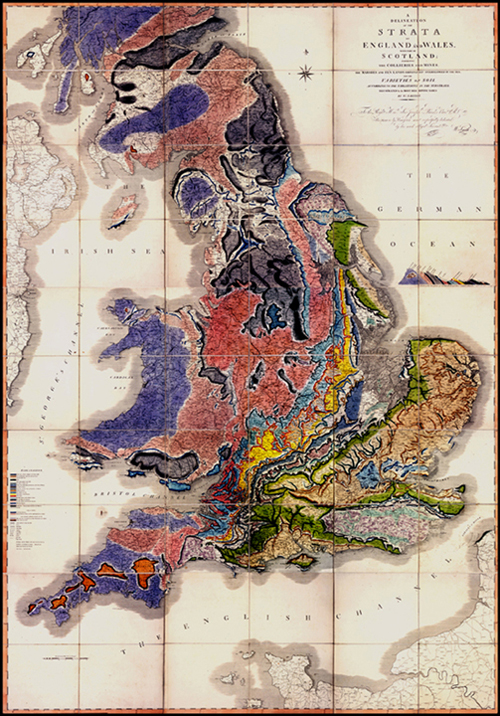
All geologists like maps: I’ve argued before that geological maps can be regarded as works of art, because of the way that they force you to think about the ground beneath your feet in new ways. Even if they’re not all as pretty as the great-grandad of them all.

smithmap.jpg

Maps of all scales, from whole countries to a couple of valleys, are available from your friendly, neighbourhood geological surveys. Whilst providing a geological map of the surrounding area or a favourite hiking spot could be regarded as undue and unnecessary encouragement, it’s possible that if we already know what’s up the top of that muddy and precarious hill, we might feel less need to drag everyone else up it so that we can take a look . Well, possibly.

Continue reading

Categories: gifts and gadgets

Publication and Publicity

What’s a science blogger to do when the media is awash with stories about a paper that hasn’t been published yet? This was the dilemma I was faced with last week when I started reading stories about Watt el al.’s paper about possible seismic influences on volcanic eruptions in Earth and Planetary Science Letters, the subject of yesterday’s post. My interest was immediately piqued, so I headed over to the EPSL website to read all about it.
Except it wasn’t there. Perhaps it was under “Articles in Press”? Nope, not there either.
What to do, then? My personal feeling is that one of the main ways that scientific blogging can augment the public discussion about published research is by going back to the original paper. This not only allows you to check that its conclusions have been correctly reported, but gives you access to the story behind those conclusions: the methods employed to obtain them, and the arguments used to support them. Without that, whilst you can possibly add some perspective on why this particular study might be important, you’re basically limited to regurgitation and speculation, rather than explanation. But if you wait, then the attention of the general public will have wandered elsewhere.
This time, the article in question made it online only a few days later, at the beginning of this week; but this isn’t the first time this happened to me. A couple of weeks after I discussed a study which claimed the Grand Canyon was older than previously thought, I read another press release on EurekaAlert about another study that claimed an even greater age. That was released on April 10th; the paper itself was not online until a month later (technically, of course, Watt et al. is not published yet either).
Has anyone else encountered this problem? In both cases it seems the original press release did refer to the fact that the research was not yet published (even if in the recent case, this admission doesn’t make it into the BBC version); but I find the fact that in some cases publication seems to have been completely decoupled from the public fanfare a little troubling. Maybe there’s something to be said for the more rigorous embargoes employed by the likes of Nature after all.

Categories: public science, publication

Rattle, then boom, in the Andes

ResearchBlogging.orgIt’s been almost two centuries since a possible link between large earthquakes and nearby volcanic eruptions was first proposed by none other than Charles Darwin, who compiled accounts of increased activity at a number of Andean volcanoes in the wake of the 1835 Concepcion earthquake. In the decades since, however, firm evidence of earthquakes triggering volcanic eruptions has remained somewhat elusive; but a new paper by Sebastian Watt and colleagues at the University of Oxford takes a fresh look at Darwin’s old seismic stomping grounds, and claims that spikes in volcanic activity in the Andes can indeed be observed in the months following large earthquakes.
Continue reading

Categories: earthquakes, geology, paper reviews, volcanoes